Logistics Solutions & Services for the Retail Industry
India’s retail market is growing fast not only in physical stores but also in online shopping and direct-to-consumer sales. This growth is changing how goods are stored, moved, and delivered. According to Agriculture and Agri-Food Canada, using data from Euromonitor International, India’s retail e-commerce sales hit US$79.4 billion in 2024. This recorded annual growth of 22.7% from 2019. This makes efficient logistics more important than ever. Good logistics help retailers keep up with demand and stay competitive by managing inventory across multiple sales channels.
A product being available online or on a store shelf is only one part of the retail experience. The product also needs to be delivered to the right location, in the required quantity, and within the expected timeframe. Any delay in the process, error in the order, or inconsistent delivery can affect sales and cause other challenges in daily operations.
Retail logistics solutions assist a company with coordinating the processes of moving goods between suppliers and warehouses, stocking stores, and delivering products to customers. The appropriate method is determined by the product type, sales model, delivery requirements, and operation size.
What Are Retail Logistics Solutions?
Retail logistics covers the planning and execution of activities involved in moving goods from suppliers to storage facilities, distribution points, retail outlets, and customers. It connects inventory management with transportation, order fulfilment, and delivery coordination.
Depending on the business model, these activities may include:
- Transportation: Moving goods between suppliers, warehouses, distribution centres, and stores.
- Warehousing: Receiving, storing, and organising products until they are required.
- Inventory management: Monitoring stock movement and identifying replenishment requirements.
- Order fulfilment: Picking, packing, and preparing products for dispatch.
- Distribution: Coordinating deliveries across retail locations and customer destinations.
- Shipment visibility: Tracking consignments and accessing delivery updates.
These functions work best when they are coordinated rather than managed as disconnected activities. A retailer with several outlets, for example, needs to know not only whether a shipment has left the warehouse but also whether it will reach the correct store before its stock runs low. In both cases, logistics solutions for retail businesses should support the movement of goods without adding unnecessary complexity to daily operations.
Why Does Retail Need Efficient Logistics?
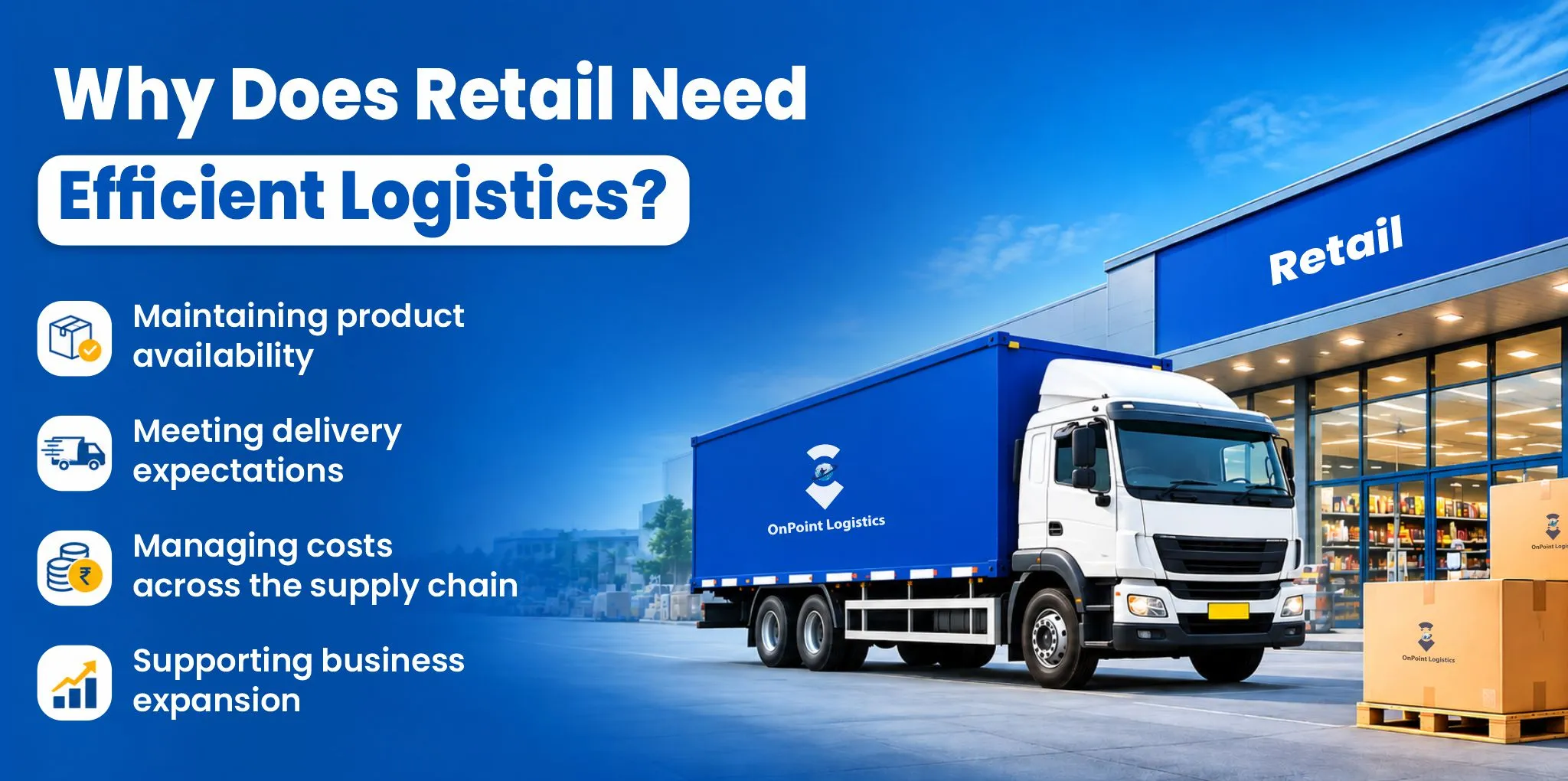
Retail demand can change with seasons, promotions, local buying patterns, and product launches. Well-planned logistics solutions for retail businesses help coordinate stock movement with sales patterns, store requirements, and delivery schedules. They also give operations teams a clearer view of shipment progress, making it easier to identify delays and adjust plans.
Maintaining product availability
Stock shortages can result in missed sales, while excess inventory ties up working capital and storage space. Coordinated transportation and inventory planning help retailers move replenishment stock according to demand and availability.
Meeting delivery expectations
Retailers often work with store-opening schedules, receiving windows, promotional launches, and customer delivery commitments. Reliable transportation and clear dispatch planning help align deliveries with these requirements.
Managing costs across the supply chain
Operating costs arise due to transportation, storage, handling, and multiple deliveries. The retailers can analyze shipment size, delivery frequency, vehicle utilization, and warehouse location to find ways to improve resource utilization.
Supporting business expansion
Opening new stores or serving customers in additional locations introduces more delivery routes, inventory movements, and coordination requirements. Scalable retail logistics solutions help businesses organise these activities as their distribution networks grow.
Key Logistics Solutions & Services for Retailers
Various retail businesses have specific needs regarding logistics capabilities. A retailer’s logistics solutions & services depend on factors such as shipment volumes, frequency of deliveries, the products involved, and the destination of products being served. Understanding various possibilities helps businesses in developing their distribution models.
1. Road Transportation for Store Replenishment
Road transportation is useful for moving retail goods between warehouses, distribution centres, suppliers, and stores. The appropriate vehicle and shipment arrangement depend on cargo volume, route, delivery schedule, and handling requirements.
Two common options are:
- Full Truckload (FTL): Suitable when a shipment requires a dedicated truck.
- Partial Truckload (PTL): An option when the shipment does not require the full capacity of a truck and can move through a shared-load arrangement.
For example, a retailer replenishing several outlets may use PTL for smaller consignments, while a large seasonal stock movement may justify FTL. The decision should account for the total cost, transit requirements, and handling involved.
2. Warehousing and Inventory Management
Warehousing provides space to receive, organise, and store products before dispatch. Effective inventory management helps retailers understand what stock is available, where it is located, and when replenishment may be needed.
A well-planned warehouse process usually involves receiving goods, checking them, recording details, storing them, picking items, packing orders, and preparing dispatch. Keeping accurate records at every step helps teams investigate discrepancies and make better decisions about restocking.
For retailers that deal with products that have different turnover rates, storage requirements, or demand patterns, the warehouse processes should match the type of inventory. It’s not wise to use one approach for all products. Instead, the methods should be adjusted based on how items sell, how much space they need, and how often they are ordered.
3. Third-Party Logistics (3PL)
A third-party logistics provider can manage selected logistics activities on behalf of a retailer. Depending on the agreed scope, this may include transportation, warehousing, inventory management, fulfilment and distribution.
Choosing to outsource can help a business when it needs additional operational or wants to manage several logistics functions with just one partner. Before signing a deal, retailers should establish clear responsibilities, reporting arrangements, service expectations, and escalation procedures.
4. Air and Rail Transportation
The transportation mode should match the shipment's urgency, size, route, and budget.
Air express might be worth looking at for time-sensitive shipments where the faster travel time makes the higher cost reasonable. Rail can be looked at for distance or bulk shipments where the schedule, connection, and handling fit the need.
Neither air express nor rail is automatically the pick for all shipments. Retailers need to look at the complete movement from pickup to terminal handling and onward transportation to final delivery.
How to Choose the Right Retail Logistics Model
A reliable logistics provider should clearly explain the services it offers, the responsibilities involved, and how its arrangement will support the retailer's distribution needs. Before choosing retail logistics solutions, businesses should consider a few important factors.
Understand shipment patterns
Look at how frequently products are shipped, the average shipment size, delivery distances, and changes in demand throughout the year. . This helps determine whether consolidated freight, dedicated transport, or a combination of modes is required.
Assess warehouse and fulfilment needs
Consider the number of stock-keeping units (SKUs), storage requirements, warehousing costs, order volumes, and handling processes. Retailers selling through both physical stores and online channels must also decide how inventory will be distributed.
Check visibility and reporting
Inquire about the way shipment status, inventory movements, and delivery confirmation will be communicated. Determine what type of data is accessible, how regularly it updates, and who will handle discrepancies.
Identify delivery requirements
Determine fixed receiving windows, urgent shipments, repetitive deliveries, and places with established delivery processes. Clear specifications enable effective route planning and delivery coordination by the logistics team.
Compare the complete cost
Account for storage costs, loading fees, unloading charges, handling expenses, extra trips, and any waiting or cancellation fees that might apply. When you add all these together, you get a picture of the true cost of moving and managing goods. This total cost gives a more realistic basis for making decisions.
When looking at retail logistics solutions, businesses should also make sure the service being offered can handle their current shipment volumes. They need to check if the service works for all their destinations and can adapt to changes in demand. It's important that the solution is flexible and scalable.
Technology and Its Impact on Retail Logistics
Technology makes it easier for retailers and logistics providers to share information and keep track of daily operations. It also helps teams identify delays and make decisions using updated shipment and inventory records.
Some useful capabilities include:
- Shipment tracking - Provides updates on consignment movement and delivery progress.
- Inventory records - Help teams check available stock and monitor product movements between locations.
- Digital proof of delivery (POD) - Creates a digital record confirming delivery.
- Notifications - Keep relevant teams informed about shipment milestones or changes.
- Reporting dashboards - Help operations teams review shipment status and identify recurring issues.
Preparing for Seasonal Changes in Retail Demand
Festive seasons, major sales, promotional campaigns, and new product launches can increase shipment volumes within a short period. Retailers need to prepare for these changes before order volumes begin to rise.
A few areas require attention during this planning process:
- Review previous demand patterns - Look at past sales data and dispatch records to predict exact requirements.
- Plan stock positioning - Identify and decide which products should be stored closer to areas where demand is expected to grow.
- Confirm transportation capacity - Discuss with the logistics teams regarding probable shipping volumes, dispatch frequency, and supply conditions.
- Coordinate warehouse operations - Prepare for the increase in receiving, picking, packing, and dispatch operations.
- Monitor progress - Check the status of pending orders, shipping information, and stock levels during the peak season.
Well-planned retail logistics solutions allow businesses to respond to demand changes with greater coordination. Forecasts should still be reviewed against actual orders, supplier availability, and transport capacity rather than treated as fixed commitments.
Common Challenges Retailers Should Plan For
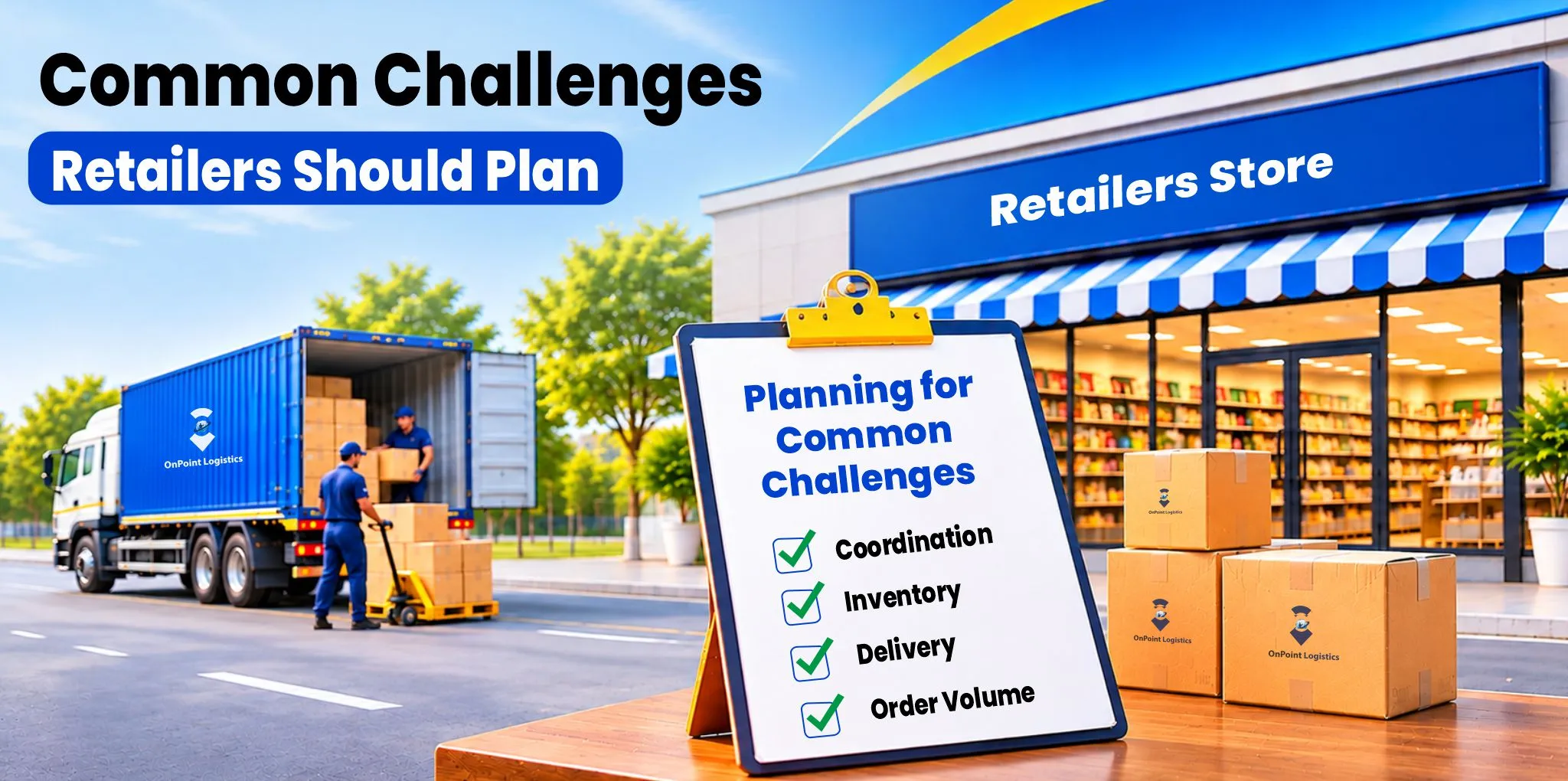
Even a well-designed logistics arrangement needs regular review. Retailers should pay particular attention to issues that can affect stock availability, delivery reliability and operating costs.
- Fragmented coordination - Multiple transporters, warehouses, and internal teams may work with different records. Clear ownership and consistent reporting help reduce communication gaps.
- Inventory discrepancies - Differences between recorded and actual stock can delay replenishment. Regular checks and accurate movement records help teams identify the cause.
- Unplanned delivery delays - Traffic, route conditions, capacity constraints, and receiving restrictions can affect schedules. Contingency planning and timely communication help teams respond.
- Changing order volumes - Promotions and seasonal peaks can put pressure on warehouse and transport capacity. Advance planning should account for both expected demand and available resources.
For B2B logistics, these challenges can affect the relationship between suppliers, distribution centres and retail outlets. Businesses should establish practical service expectations and review performance against agreed measures rather than relying on general promises of speed or reliability.
How OnPoint Logistics Supports Retail Operations
At OnPoint Logistics, we provide transportation and logistics services that businesses can consider when organising the movement, storage, and distribution of goods. The appropriate service depends on shipment requirements, destinations, and the operational support needed.
Our available services include:
- Road Express - Supports road transportation, with PTL and FTL options for different shipment requirements.
- Air Express - An option for shipments requiring air transportation. Suitability depends on urgency, route, and cost.
- Train Express - Supports rail-based movement for suitable shipment requirements.
- 3PL and Inventory Management - Covers warehouse and inventory operations, shipment management, and fulfilment support.
- Scheduled Deliveries - Helps businesses plan shipments around defined delivery schedules.
- Appointment Delivery - Supports deliveries that require coordination around agreed time slots.
For retailers, these services can be evaluated individually or in combination according to the movement of goods, storage needs, and delivery schedules. We aim to help businesses identify a suitable logistics arrangement for their operational requirements.
When considering retail logistics solutions, retailers should confirm service availability for the relevant routes, shipment types, and delivery requirements before finalising a plan.
Build a More Reliable Retail Supply Chain with the Right Logistics Solutions
Retail operations rely on more than having products ready for sale. Goods must travel through the supply chain in a manner with proper storage, accurate inventory records and reliable transportation.
The best retail logistics solutions match a company’s shipment volumes, sales channels, delivery schedules, and growth plans. Retailers need to look at the complete movement of goods, from when a supplier picks them up to when they reach the customer, before choosing which services to outsource and which to keep in-house. Retail logistics solutions are shaped by these factors, and retailers must understand the movement of items to decide on outsourcing or internal control.
At OnPoint Logistics, our transportation, 3PL, inventory management, and scheduled delivery services provide options for businesses reviewing their logistics requirements. Choosing the right combination starts with understanding your operational needs and confirming which services are suitable for your shipments.
FAQs
1. What are retail logistics solutions?
Logistics solutions for retail include all transportation, warehousing, inventory management, order fulfillment, and distribution functions that allow the delivery of goods from suppliers to stores or consumers.
2. How can a retailer choose the right logistics provider?
The retailer must consider aspects such as the coverage of the services provided, shipment capacity, delivery options, tracking and reporting tools, handling process, customer service, and overall cost. The logistics provider must be able to demonstrate how its services correspond to the requirements of the retailer.
3. What is the role of 3PL in retail?
Third-party logistics makes it possible to outsource certain processes, such as transportation, warehousing, inventory management, and fulfillment. The scope of these processes depends on the agreement made between the retailer and the service provider.
4. How can logistics solutions & services help retailers manage seasonal demand?
They can help retailers plan the positioning of their stocks, warehousing, transportation, and dispatching before the peak seasons arrive. Constant monitoring will allow adjusting the plan according to the changes in orders.
5. Why are logistics solutions for retail businesses important for growth?
As a retail organization expands into other areas of distribution or marketing, there will be a need to manage greater movement of goods, deliveries, and warehousing. Appropriate logistics arrangements can facilitate this as the business grows.