Third-Party Logistics Companies in India: A Complete Guide
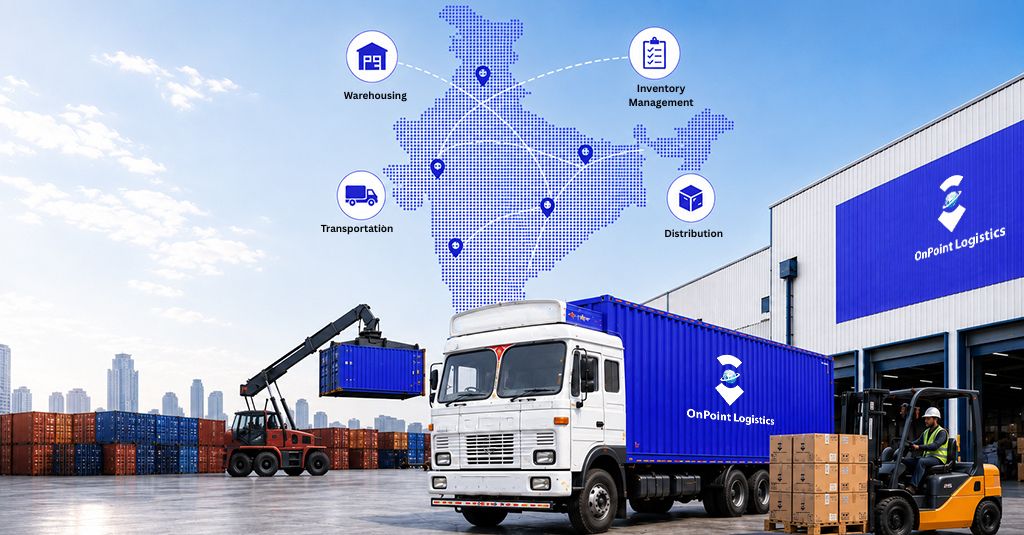
Third-party logistics companies in India help businesses outsource transportation, warehousing, inventory management, order fulfillment, and distribution to specialized logistics providers. Instead of investing heavily in logistics infrastructure, businesses can work with a 3PL logistics company in India that already has the people, network, vehicles, warehouses, and systems needed to manage these activities.
For a manufacturer, wholesaler, retailer, distributor, or eCommerce business, the decision usually comes when logistics starts taking too much time to manage internally. More delivery locations mean more transporter coordination. Higher inventory means tighter warehouse control. And once shipment volumes increase, even a small delay can create a chain of follow-ups for the operations team.
A reliable 3PL partner can take over some or all of these activities, depending on the business requirement. The real advantage is not simply outsourcing logistics. It has a setup that can handle changing shipment volumes and locations without forcing the business to build every part of the infrastructure itself.
Why Businesses Are Rethinking Logistics
Logistics was once treated as a back-end function. If the goods reached the customer, the immediate job was done. That approach becomes harder to maintain when a company starts serving more cities, carrying more inventory, and handling larger shipment volumes.
Consider a manufacturer in Delhi that has expanded into several states. Production is running as planned, but the operations team now has to coordinate different transporters, warehouse movements, delivery schedules, and customer updates. A delayed vehicle can mean several phone calls. A warehouse stock mismatch can hold up dispatch. A missed delivery appointment can push the shipment into another delivery cycle.
The problem is no longer just transportation. It is the amount of coordination required to keep the entire movement running.
This is where businesses often start looking at third-party logistics companies in India. Instead of adding another warehouse, purchasing vehicles, hiring additional staff, and managing new systems internally, they can outsource specific logistics functions to a provider that already has the required operating setup.
There is also a practical reason behind this shift. Logistics requirements rarely stay fixed. A business may need additional capacity during a seasonal peak and considerably less during quieter months. A 3PL model can provide more flexibility than building permanent infrastructure for the highest expected demand.
What is a Third-Party Logistics (3PL) Company?
A third-party logistics (3PL) company is a specialized logistics partner that manages one or more supply chain functions on behalf of another business.
The scope can be as narrow or broad as required. A company might outsource only transportation, while another may hand over warehousing, inventory, order fulfillment, distribution, and returns management to the same provider.
These functions may include:
- Transportation
- Warehousing
- Inventory management
- Order fulfilment
- Distribution
- Freight management
- Reverse logistics
- Shipment tracking
A 3PL logistics company in India therefore does more than move a shipment from one point to another. Depending on the arrangement, it can become responsible for coordinating several connected activities that determine how efficiently goods move through the supply chain.
For example, if inventory is stored in a 3PL warehouse, the same provider may receive the order, pick and pack the product, arrange transportation, provide shipment visibility, and coordinate delivery. Having these activities connected can reduce the number of separate parties an operations team needs to manage.
Why Businesses Choose 3PL Services
As shipment volumes increase, logistics tends to become more difficult to control rather than simply more expensive. Managing several transporters, warehouse teams, inventory records, and delivery schedules can take up a significant amount of internal time.
This is why more businesses are investing in 3PL services logistics. The decision is generally driven by a combination of operational and business requirements.
The most common reasons businesses choose a 3PL partner include:
- Expanding into new markets without setting up additional logistics infrastructure immediately.
- Reducing the need for direct investment in warehouses, vehicles, equipment, and logistics manpower.
- Improving delivery coordination as shipment volumes increase.
- Getting better visibility into inventory and shipments.
- Managing seasonal demand without maintaining peak capacity throughout the year.
- Reducing the number of day-to-day transporter and warehouse follow-ups handled by internal teams.
- Allowing internal employees to spend more time on production, sales, customer management, and other core activities.
For businesses operating across multiple cities or states, a reliable 3PL logistics company in India can also provide access to an established transportation network instead of requiring the company to build its own network location by location.
The important point is that outsourcing should solve an actual operational problem. If a business can manage its current logistics efficiently with an internal setup, there may be no reason to outsource everything. The case for 3PL becomes stronger when complexity starts affecting service levels or restricting growth.
Logistics Services Provided by a 3PL Company
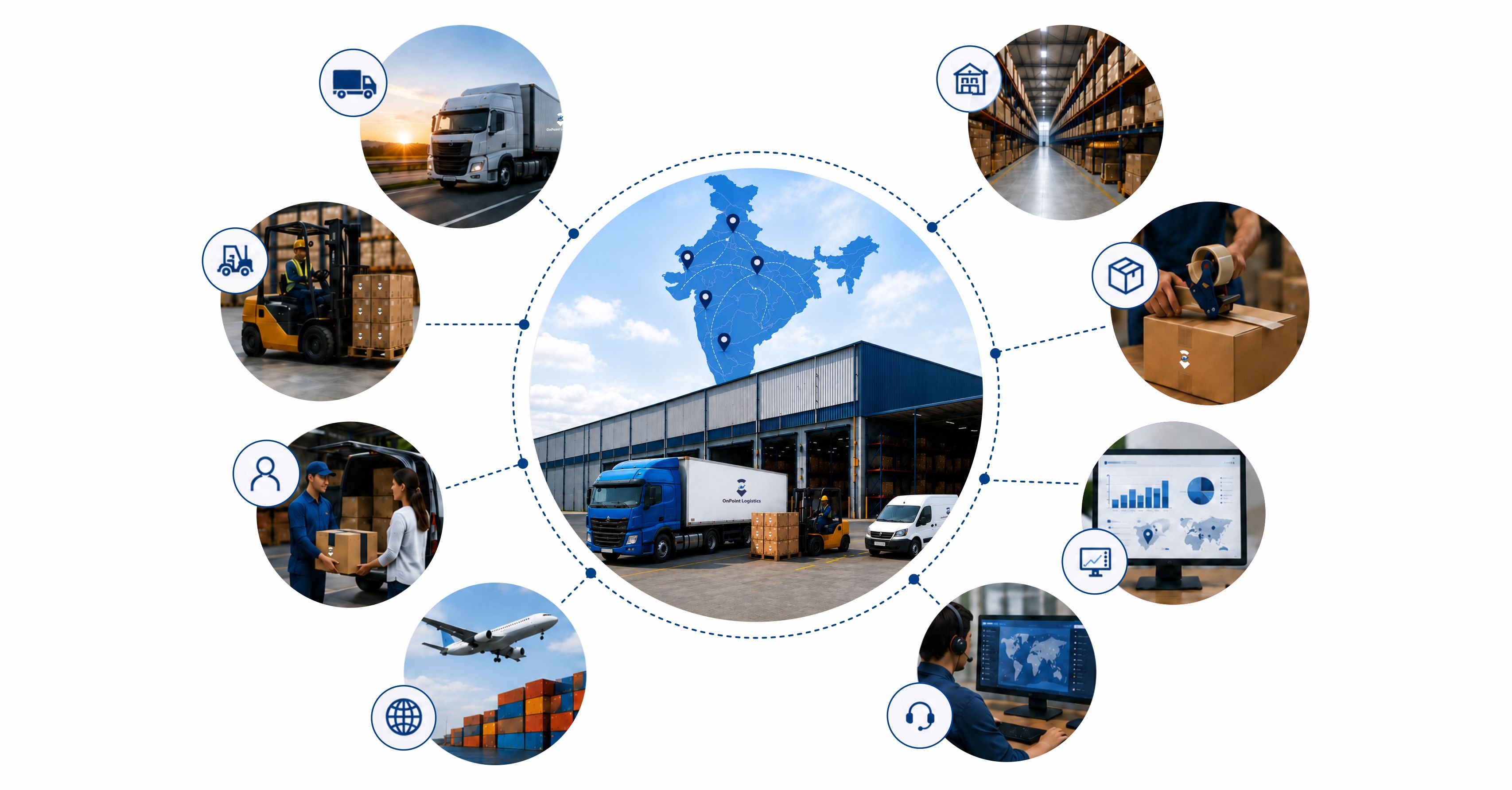
Every business has its own approach to logistics. Depending on what the business really needs, third-party logistics companies in India can perform specific logistics activities or manage several parts of the supply chain together. 3PL companies offer logistics services such as transportation, warehousing, inventory, fulfillment, distribution and returns. This allows companies to not have to manage every little logistics activity themselves, while still having more control over the day-to-day operations.
1. Transportation Management
Moving a shipment from one place to another involves more than finding an available truck. The vehicle has to suit the shipment, the pickup needs to happen on time, and the route and delivery schedule have to work together. A 3PL logistics company in India can handle these activities and coordinate the shipment from pickup through delivery.
Common transportation services include:
- Full Truck Load (FTL)
- Part Truck Load (PTL)
- Dedicated Fleet Services
- Express Road Transportation
- Multi-modal Transportation
- Interstate Distribution
2. Warehousing & Inventory Management
A warehouse can have plenty of space and still create problems if the business does not know exactly what is available or where a particular product is stored. Inventory needs to be recorded properly, picked without unnecessary searching, and updated when stock moves in or out.
A 3PL partner can handle these warehouse activities and help businesses maintain a clearer view of their stock. The warehousing services include:
- Inventory Storage
- Warehouse Management
- Barcode Tracking
- Order Picking
- Packing
- Stock Reconciliation
- Inventory Reporting
3. Order Fulfilment
Once an order comes in, several things have to happen before it can leave the warehouse. The correct product needs to be found, checked, packed, and prepared for dispatch. When order volumes are high, even a small delay in one step can affect the next dispatch cycle.
Order fulfilment includes:
- Receiving Orders
- Picking Products
- Quality Checks
- Packaging
- Dispatch
- Delivery Coordination
4. Distribution Management
Getting products into a warehouse is only one part of the supply chain. They still need to reach distributors, retail stores, dealerships, or customers at the required time. Distribution planning becomes more complicated as the number of delivery locations increases.
Distribution services typically include:
- Regional Distribution
- National Distribution
- Retail Distribution
- Dealer Network Deliveries
- Scheduled Deliveries
- Appointment Deliveries
5. Reverse Logistics
The logistics process does not always end with a successful delivery. Products may be returned because they are damaged, incorrect, rejected, or need replacement. These shipments have to move back through the supply chain and should remain visible throughout the process.
The reverse logistics services include:
- Product Returns
- Return Verification
- Reverse Transportation
- Replacement Deliveries
- Return Inventory Management
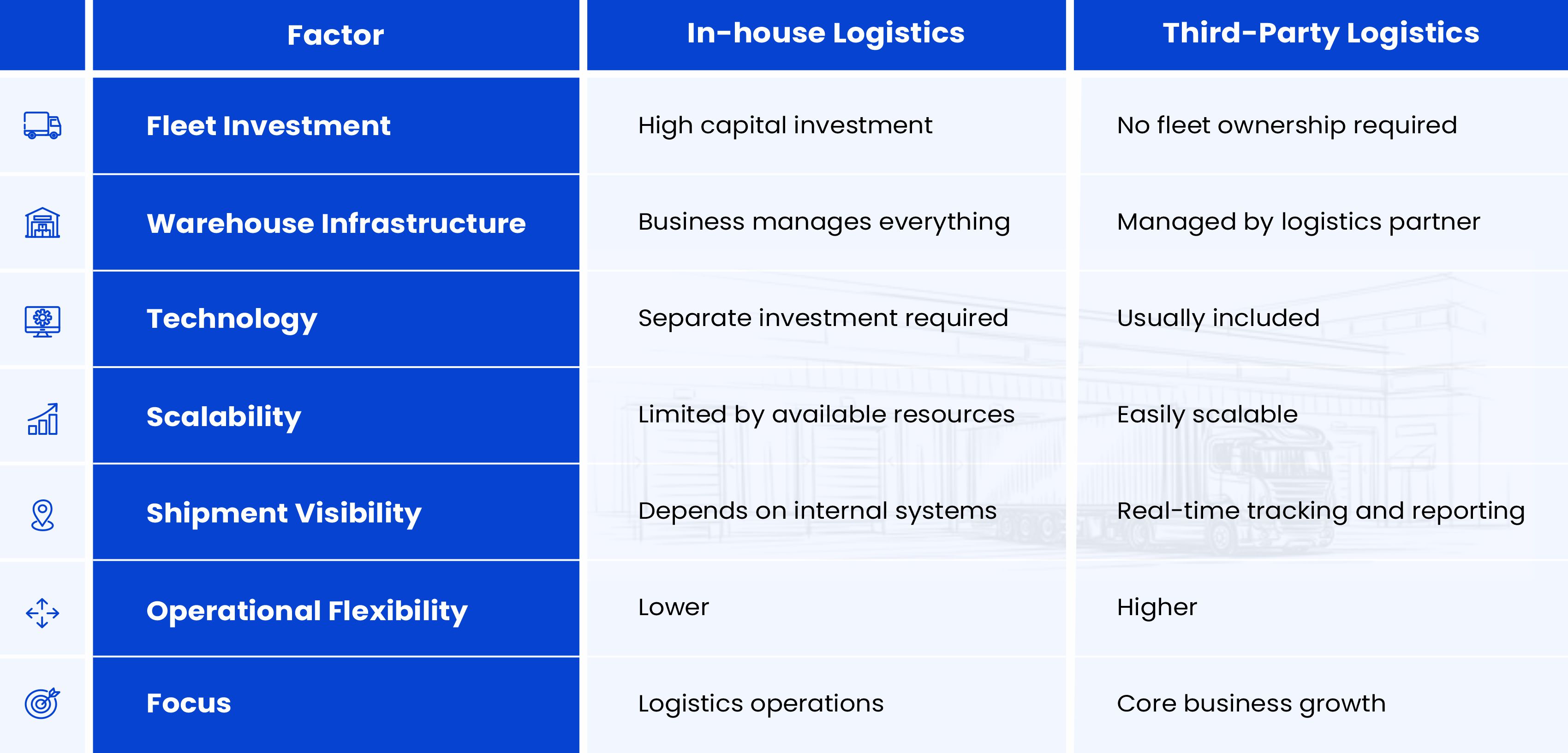
In-house Logistics vs Third-Party Logistics
In reality, control comes from visibility, efficient processes, and reliable execution, not simply from owning assets.
Benefits of Working with a 3PL Partner
Working with a reliable 3PL logistics company in India creates measurable operational advantages.
Operational Efficiency
Cost Management
Business Expansion
Customer Experience
Supply Chain Visibility
Which Industries Benefit the Most from Third-Party Logistics?
Every business moves products, but the logistics problem is rarely the same across industries. A pharmaceutical company may be concerned about sensitive products and documentation, while an eCommerce brand may be dealing with high order volumes and returns.
This is why third-party logistics companies in India need to adapt their services to the customer's operating model rather than offering exactly the same process to every business.
Manufacturing
Manufacturers depend on a steady flow of raw materials, components and finished goods.
Common Challenges:
- Bulk transportation
- Plant-to-warehouse movement
- Inventory visibility
- Dealer distribution
- Production scheduling
A delayed shipment can sometimes affect production itself. If a required component or raw material does not arrive when planned, the effect may extend beyond transportation and disrupt the production schedule.
Retail & FMCG
Retail and FMCG businesses need products available at the right locations when stores require replenishment.
Common Challenges:
- Store replenishment
- Seasonal demand spikes
- Inventory balancing
- Faster distribution
- Delivery scheduling
When inventory is not available at the right location, the problem can quickly move from logistics into lost sales. This is why distribution planning and stock positioning matter as much as transportation.
eCommerce & D2C Brands
For eCommerce businesses, logistics continues after an order is placed. The product needs to be picked, packed, dispatched, delivered and sometimes returned.
Common Challenges:
- High daily order volumes
- Order fulfilment accuracy
- Reverse logistics
- Delivery timelines
- Customer experience
Here, small process errors can multiply quickly because the number of individual orders is often high. A picking error that seems minor on one order can become a significant operational issue when repeated across hundreds of shipments.
Healthcare & Pharmaceuticals
Healthcare logistics requires greater attention to product handling, documentation and delivery requirements.
Common Challenges:
- Sensitive shipments
- Regulatory compliance
- Temperature-controlled transportation
- Delivery accuracy
- Documentation
The exact requirements depend on the type of product being transported and the applicable handling standards. For these shipments, the logistics process needs to be planned around the product requirements rather than treated as standard freight movement.
Automotive & Engineering
Automotive businesses often depend on the timely movement of components between suppliers, plants, warehouses and other facilities.
Common Challenges:
- Component transportation
- Vendor coordination
- Warehouse operations
- Scheduled deliveries
A missed delivery can create knock-on effects when components are required for planned production activity. Consistent scheduling and coordination are therefore important parts of the logistics arrangement.
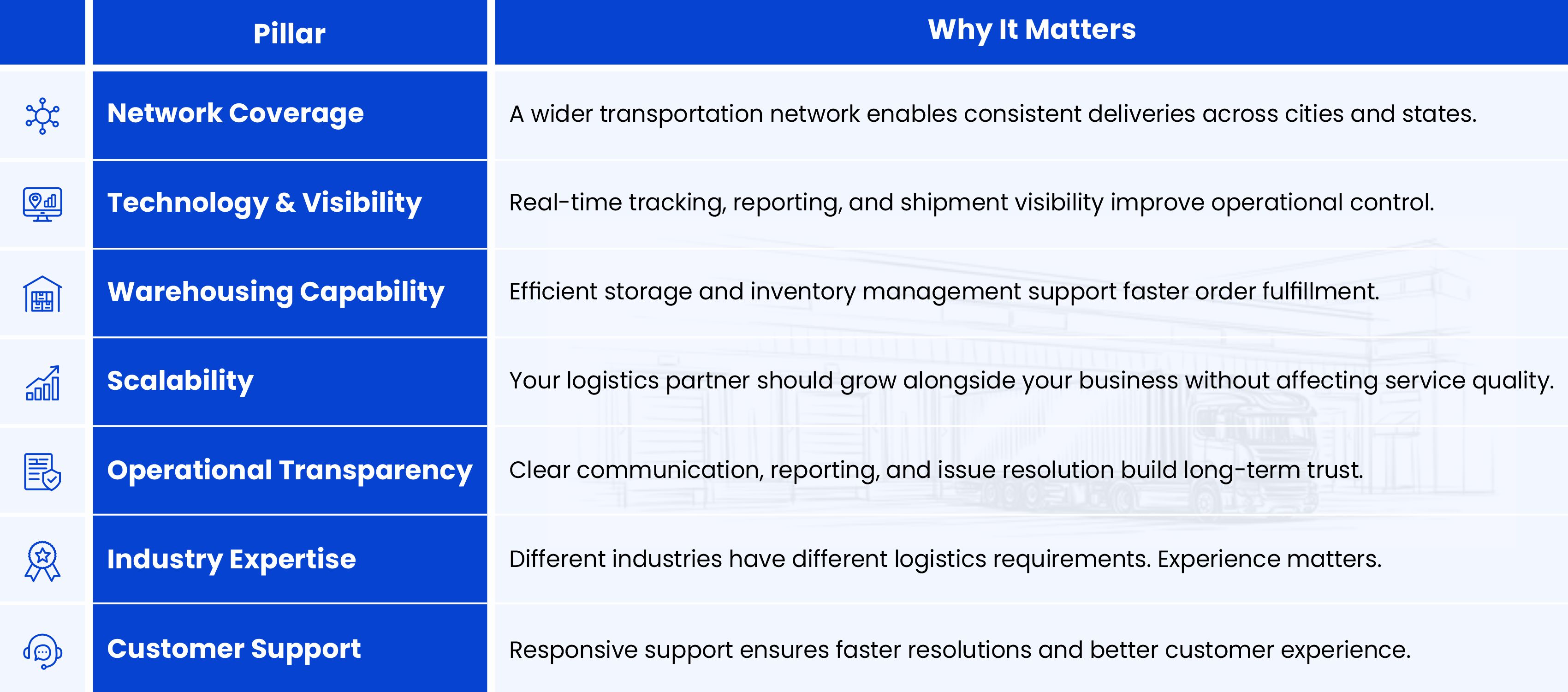
The 7 Pillars of an Excellent 3PL Partner (OnPoint logistics Framework)
Choosing a logistics partner is a long-term business decision. While transportation rates often receive the most attention, the overall capability of a logistics provider has a much greater impact on operational performance.
At OnPoint Logistics, we believe every reliable 3PL partner should be evaluated against these seven pillars.
Common Mistakes Businesses Make When Choosing a 3PL Partner
Many businesses choose a logistics provider based on price, not long-term value. When selecting a good 3PL partner, the criteria should be not only cost but also capability, technology, service quality and scalability.
- Choose a provider primarily based on their transportation rates.
- Ignoring shipment tracking and technology capabilities.
- Selecting a partner with a limited geographic coverage.
- overlooking warehousing capabilities.
- Not evaluation for scalability for future business growth.
- Not defining service expectations or SLAs.
Future of Third-Party Logistics in India
Rapid change in India’s logistics industry is driven by technology, evolving customer expectations and supply chain transformation.
The key trends driving the future AI-powered route optimization and planning.
- Digital platforms for real time shipment visibility
- Integrated Warehouse Management Systems (WMS).
- Transportation Management Systems (TMS)
- Sustainable, fuel-efficient logistics operations
- Demand forecasting using data.
- Multi-modal transport networks.
- Warehousing and fulfillment automation.
Why Businesses Choose OnPoint Logistics
Choosing a logistics partner is more than selecting a transportation provider, it's about finding a team that understands your business, adapts to your operational needs, and supports your long-term growth.
At OnPoint Logistics, we work with manufacturers, wholesalers, retailers, distributors, and eCommerce businesses across India to simplify complex logistics operations through technology, operational expertise, and a customer-first approach.
Rather than offering standard transportation services, we build logistics solutions around your business requirements.
Whether you need Full Truck Load (FTL) transportation for large shipments, Part Truck Load (PTL) services for cost-effective distribution, warehousing, dark store solutions, or end-to-end supply chain support, our goal remains the same to help your business move faster, operate more efficiently, and deliver a better customer experience.
What Sets OnPoint Logistics Apart?
Technology-enabled shipment tracking
PAN India transportation network
Flexible FTL and PTL solutions
Warehousing and inventory support
Dedicated logistics coordination
Transparent communication
Scalable logistics solutions for growing businesses
Conclusion
A company rarely notices the exact day its logistics operation becomes too complicated to manage internally. It usually happens gradually: more destinations, more transporters, more inventory, and more customer calls about shipment status.
At OnPointLogistics, we work as an extension of your business, providing technology-driven logistics solutions tailored to your operational needs. From FTL and PTL services to warehousing and end-to-end supply chain management, we help businesses simplify logistics, improve delivery performance, and scale with confidence.
Frequently Asked Questions (FAQs)
1. What is a third-party logistics (3PL) company?
A third-party logistics (3PL) company manages logistics functions such as transportation, warehousing, inventory management, order fulfilment, and distribution on behalf of businesses. It allows companies to outsource logistics operations while focusing on their core business.
2. What services are provided by a 3PL logistics company?
A professional 3PL provider typically offers:
- FTL & PTL transportation
- Warehousing
- Inventory management
- Order fulfilment
- Distribution
- Reverse logistics
- Shipment tracking
- Supply chain management
3. How does a 3PL company help reduce logistics costs?
A 3PL partner helps businesses avoid major investments in warehouses, transportation fleets, logistics technology, and manpower while improving operational efficiency through established infrastructure and optimised transportation networks.
4. Is 3PL suitable for small and medium-sized businesses?
Yes. Many SMEs use third-party logistics providers to access professional logistics infrastructure without making significant capital investments.
5. What is the difference between FTL and PTL?
Full Truck Load (FTL) is ideal when a shipment occupies the entire vehicle, while Part Truck Load (PTL) allows businesses to share truck space with other shipments, making it a cost-effective option for smaller loads.