The Complete Guide to Rail Logistics Services in India
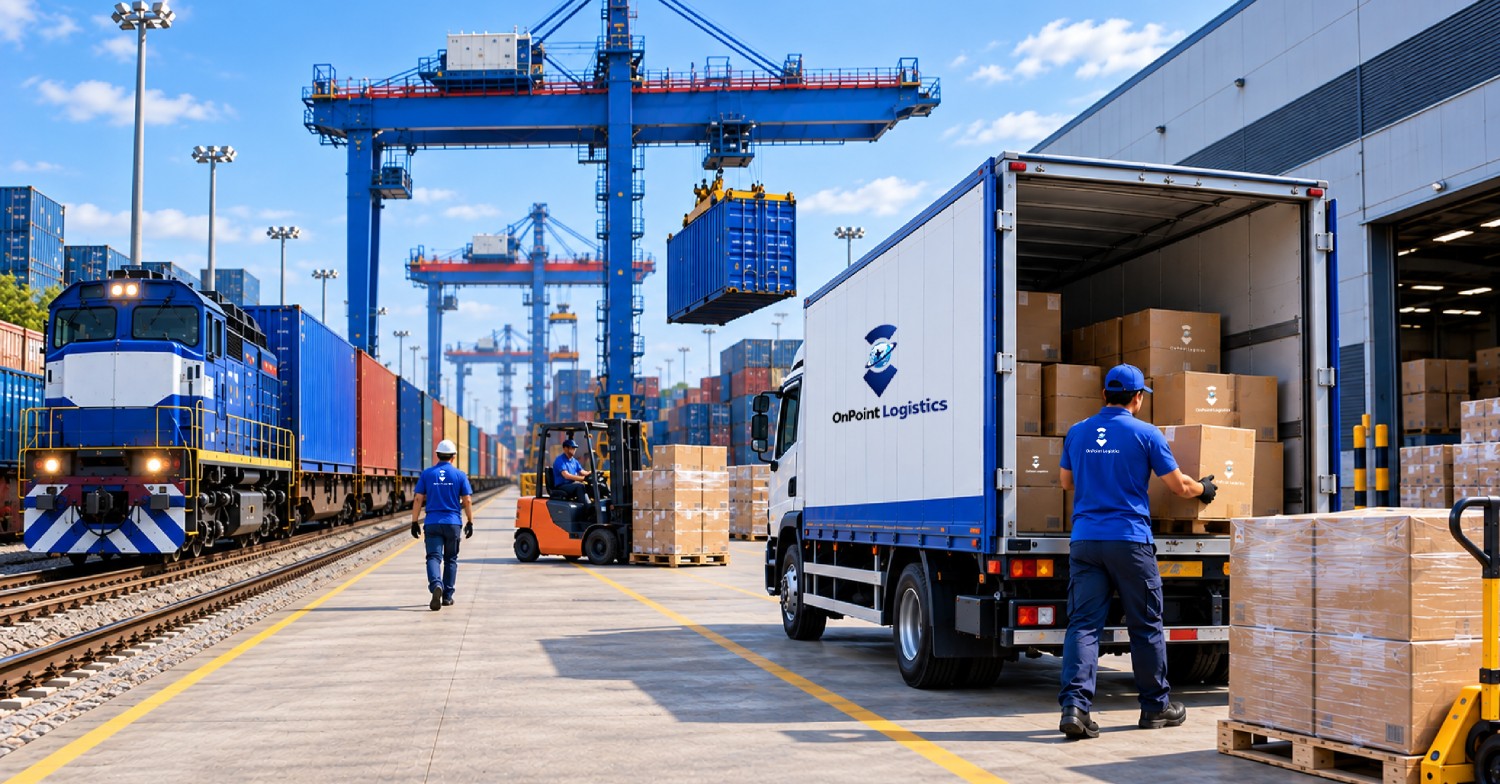
India’s growing trade and distribution networks require transportation options that can handle long distances, different cargo volumes, and increasingly complex supply chains. Rail has an important role in meeting these requirements, particularly when businesses need to move freight across long routes.
Rail continues to play an important role in India’s freight movement, particularly for businesses transporting goods over longer distances. In July 2026, Indian Rail handled 141.3 million tonnes of freight, compared with 129.7 million tonnes in July 2025, reflecting 9% growth. This continued freight activity highlights the scale at which rail is being used to move goods across the country and why businesses need to understand where rail can fit into their transportation and supply-chain requirements.
[Source: Press Information Bureau, Ministry of Railways]
For businesses, choosing rail is not simply about moving goods onto a train. The shipment needs to be planned around cargo type, route, terminals, delivery requirements, handling, and first- and last-mile movement. This is where rail logistics services in India can become part of a wider transportation strategy.
This guide explains how rail fits into modern freight movement, where it works best, the challenges businesses need to plan for, and how integrated rail logistics services can connect rail movement with the wider supply chain.
What Are Rail Logistics Services in India?
Rail logistics services in India involve the planned movement of goods through the rail network, supported by activities such as shipment coordination, cargo handling, route planning, tracking, and delivery management.
Unlike passenger transportation, freight logistics is built around the movement of commercial goods. Depending on the requirement, businesses may use rail for bulk cargo, freight consignments, parcels, or other shipments suited to rail movement.
Effective rail logistics services therefore involve more than the train journey itself. They connect the different activities required to move cargo from the origin to its final destination.
A complete rail movement may involve:
- Shipment planning and booking
- Cargo preparation and handling
- Origin-side coordination
- Rail transportation
- Shipment tracking and status updates
- Destination-side handling
- Road transportation for first- or last-mile delivery
This connected approach helps businesses understand where rail fits within their broader logistics requirements rather than treating rail transportation as a standalone activity.
Why Businesses Consider Rail for Long-Distance Transportation
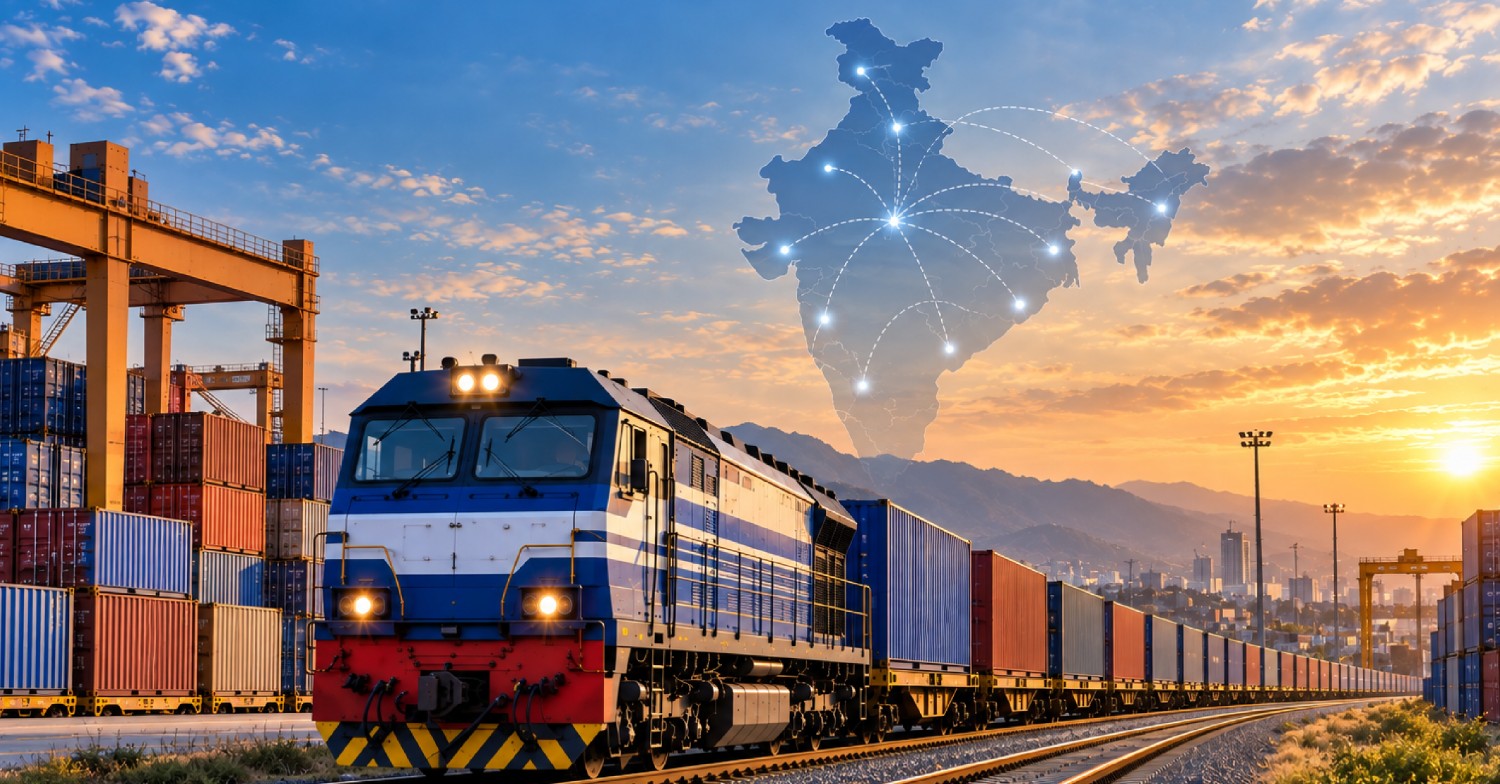
The suitability of rail depends on the shipment and route, but it can offer practical advantages when goods need to travel significant distances. Indian Rail carried a record 1,670 million tonnes of freight during FY 2025-26, according to the Ministry of Railways. Freight loading increased by 3.25% over the previous year, with commodities such as fertilisers, pig iron and steel, iron ore, and cement contributing to the growth.
In determining whether to use rail shipping for long-distance transportation on various deliveries, businesses should consider the compatibility of the route, cargo characteristics, delivery schedule, and rail facilities. Before making the final decision, it is important to evaluate the entire transportation plan instead of focusing only on distance.
- Distance: Rail transportation works best when moving goods over greater distances.
- Cargo characteristics: Rail transportation is ideal for bulk and heavy cargo shipments.
- Route accessibility: There are several factors involved in accessing the origin and destination under consideration.
- Cost estimation: Businesses need to understand the total transportation cost of the entire process, including pickup of the shipment as well as delivery.
- Timelines: Rail transportation should be used, taking into consideration the time period needed for deliveries instead of assuming that all shipments should go by rail.
While long-distance transportation is an important factor for many businesses, it is not the only consideration. Cargo handling and delivery coordination are important aspects for rail-based shipping operations. The objective is not to replace road transportation in every situation. Instead, businesses should select the mode that fits the shipment.
How Rail Fits Into Supply Chain Transportation
Modern supply chain transportation rarely depends on one mode from origin to destination. A business may need road transportation to collect cargo from a warehouse, rail for the main long-distance movement, and another road movement to reach the final destination. This creates a multimodal logistics chain.
For example:
Supplier → Local pickup → Rail movement → Destination handling → Final-mile delivery
This approach can make rail more practical for businesses that do not have direct access to a rail terminal at either end. The important part is coordination.
When supply chain transportation involves multiple stages, businesses need each stage to connect with the next. If different transportation activities are managed independently, businesses may face delays, limited visibility, or unnecessary handling.
A logistics provider that coordinates these stages can create a more connected movement plan. This is particularly relevant when rail logistics services in India are being used alongside road transportation, warehousing, inventory management, or distribution.
What Types of Shipments Can Move by Rail?
Rail is not automatically suitable for every shipment. It is necessary to take into account various factors such as type of goods, transportation route, shipment amount, urgency of the shipment, and special requirements regarding handling of cargo.
Thus, companies may choose rail logistics for:
- Large commercial shipments
- Heavy goods
- Commercial products
- Business freight
- Parcels
- Long-distance shipments
- Shipments where cost-effectiveness and efficiency of route are the foremost considerations
Train express services make it possible to meet the needs of both large bulk shipments and smaller parcels because of the nationwide rail connectivity, flexibility of freight services, safety of cargo, and availability of online tracking. That flexibility is important because businesses do not all have the same freight profile.
For businesses comparing rail cargo transportation services, the cargo profile should be assessed before the mode is selected. A heavy commercial consignment may have different requirements from a smaller parcel, even when both travel over a similar route.
When Are Rail Logistics Services the Right Fit?
Once businesses understand how rail fits into a wider transportation network, the next step is to determine whether it suits their specific shipment requirements. Rail logistics is not selected based on distance alone. The nature of the cargo, available rail connectivity, shipment volume, handling needs, and delivery schedule all influence whether rail is a practical option.
Before planning a rail-based shipment, businesses should evaluate the complete movement requirement.
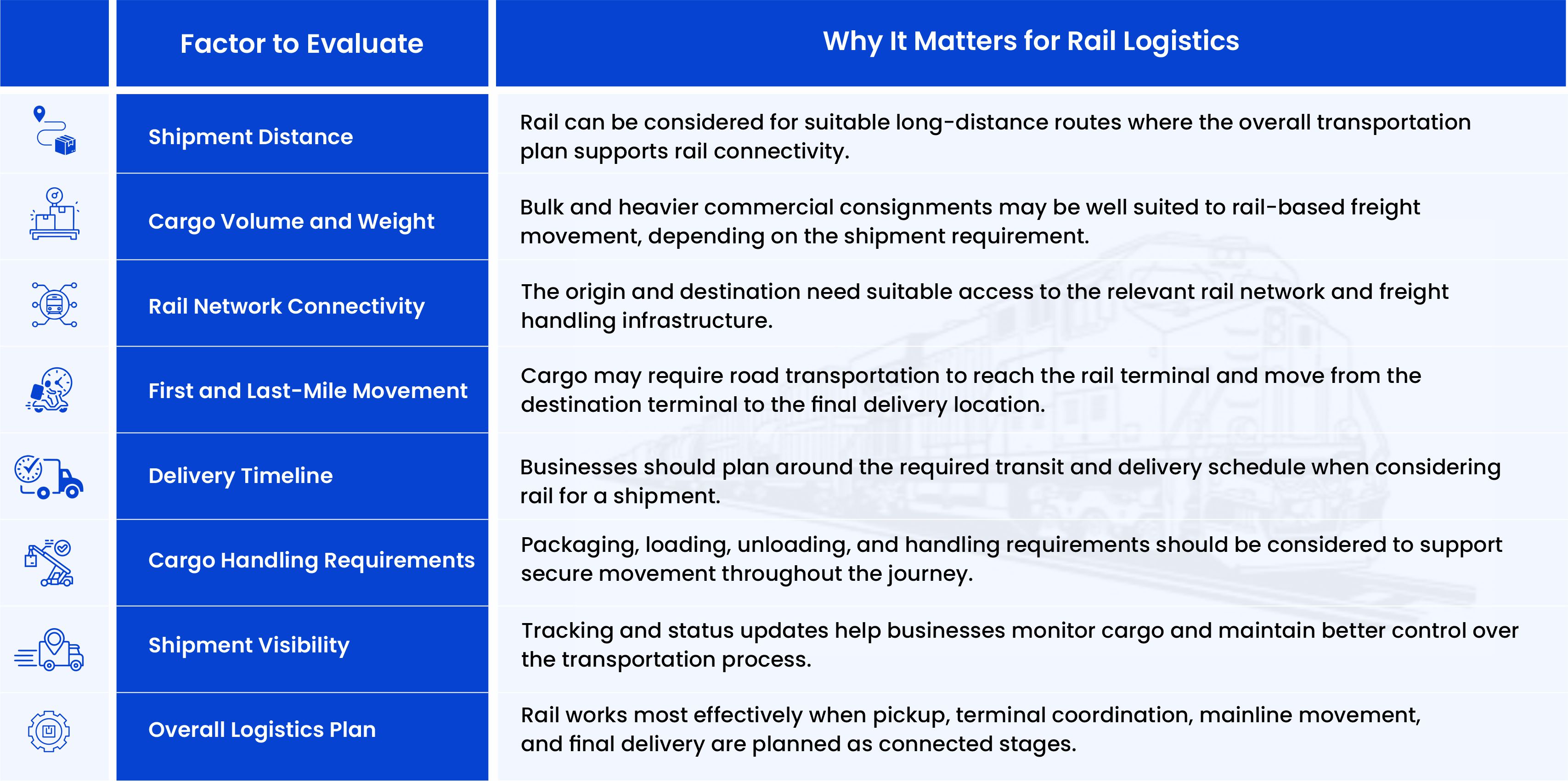
This evaluation is also important when businesses compare different rail logistics services. The provider should be able to support the operational requirements surrounding the rail movement, rather than only arrange transportation between two points.
Rail vs. Road: Which One Should Businesses Choose?
The right choice depends on the shipment rather than treating one mode as universally better.
Road transportation generally provides greater flexibility for direct pickup and delivery because vehicles can reach warehouses, factories, stores, and other locations without requiring rail-terminal access.
Rail can become a practical consideration when businesses are moving suitable cargo over longer distances and can effectively coordinate terminal and first-/last-mile requirements.
Before selecting between the two, businesses should consider:
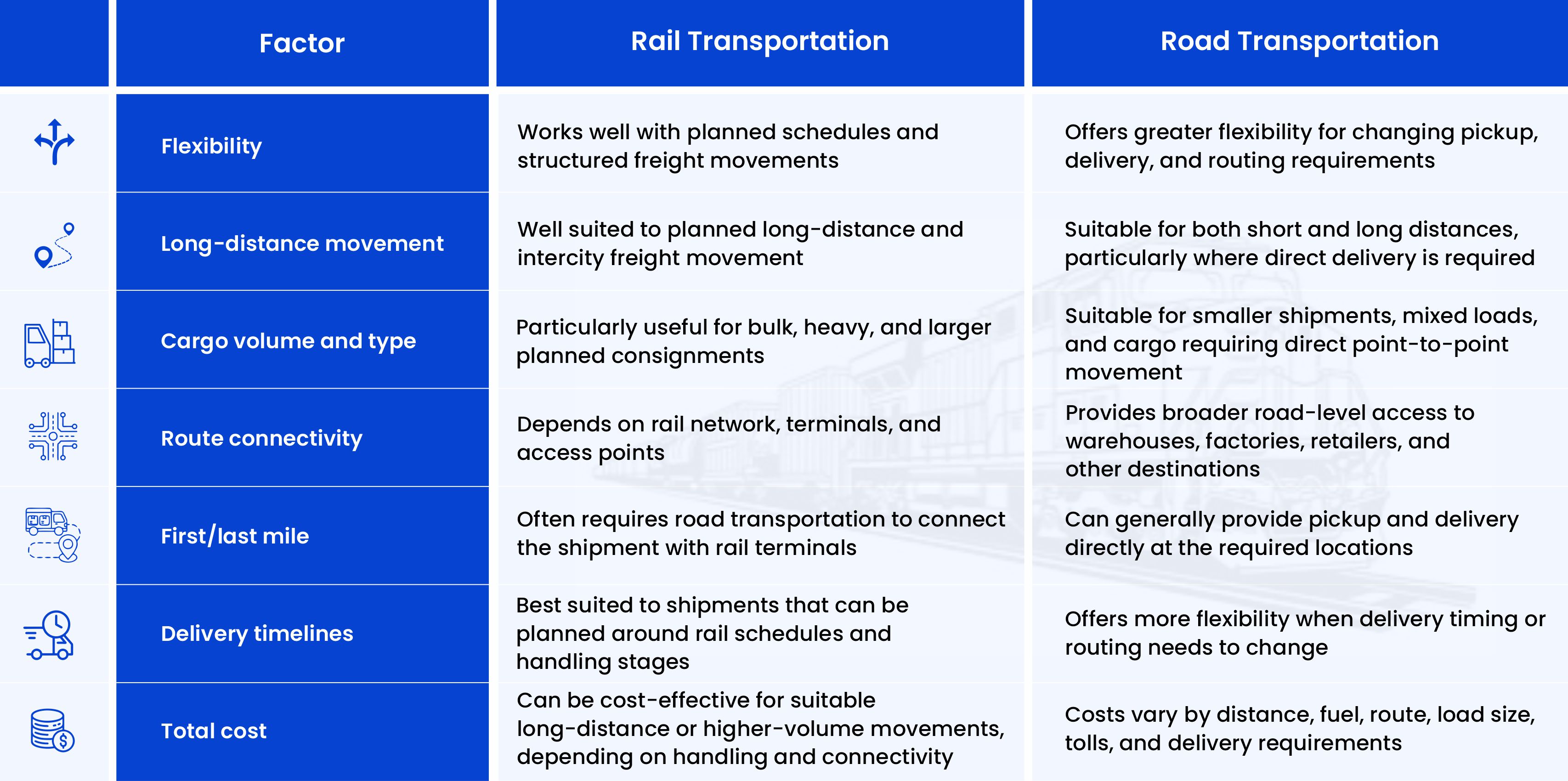
The practical decision is therefore based on the complete logistics journey, not just the primary mode.
Common Challenges in Rail Logistics
Although rail can provide valuable transportation options, businesses still need to manage several operational challenges. The common challenges include:
Limited First- and Last-Mile Connectivity
A rail network may move the shipment efficiently over the main route, but the cargo still needs to reach the rail terminal and its final destination. Without coordinated road transportation, this additional movement can create delays.
This is why businesses using rail logistics services in India need to consider road connectivity as part of the overall shipment plan.
Terminal and Schedule Coordination
Rail movement requires planning around available routes, schedules, terminals, and cargo handling arrangements. Poor coordination can affect the overall delivery timeline. For recurring rail logistics services, consistent scheduling and communication become particularly important because businesses may be managing multiple shipments at different stages.
Cargo Handling
Goods may pass through multiple handling stages. Packaging and handling procedures therefore need to be appropriate for the shipment. Businesses evaluating rail cargo transportation services should understand how cargo will be prepared, handled, tracked, and transferred throughout the journey.
Visibility Across Multiple Stages
When road and rail are combined, businesses need visibility across the complete journey rather than only the rail segment. Without consistent updates, it can become difficult to understand whether a shipment is moving according to the planned schedule.
Choosing the Wrong Transportation Mode
A shipment that requires highly flexible door-to-door movement may not be suitable for a rail-first approach. Similarly, using a premium mode for cargo that could be planned differently may affect logistics costs.
These challenges do not make rail unsuitable. They highlight why effective planning and coordination matter.
How Businesses Can Overcome These Rail Logistics Challenges
A well-managed rail movement begins before the shipment reaches the rail network. The objective is to make each stage work as part of one transportation plan.
1. Plan the Complete Route
Businesses should evaluate the shipment from pickup through final delivery instead of planning only the rail segment.
The plan should account for:
- Origin location
- Nearest suitable rail connectivity
- Destination access
- First- and last-mile transportation
- Cargo handling requirements
- Expected delivery timeline
This approach helps businesses use rail logistics services without overlooking the activities that happen before and after the train journey.
2. Use Multimodal Coordination
Combining rail with road transportation can bridge the gap between terminals and business locations. This creates a more complete transportation solution instead of leaving the business to coordinate separate providers.
For businesses managing supply chain transportation, coordinated road and rail movement can also simplify communication between different logistics stages.
3. Maintain Shipment Visibility
Real-time tracking helps businesses monitor shipment movement and stay informed about its status. Train express service includes real-time shipment tracking and automated alerts, helping businesses maintain visibility during transit.
Visibility is particularly useful when rail logistics services in India are combined with first- and last-mile transportation because businesses can monitor more than the main rail movement.
4. Match the Mode to the Cargo
Cargo weight, volume, urgency, destination, handling requirements, and route should all be considered before selecting rail. A mode should support the business requirement rather than being selected simply because it appears economical on paper.
This assessment also helps businesses determine whether specific rail cargo transportation services are appropriate for their shipment.
What to Look for in Rail Logistics Services
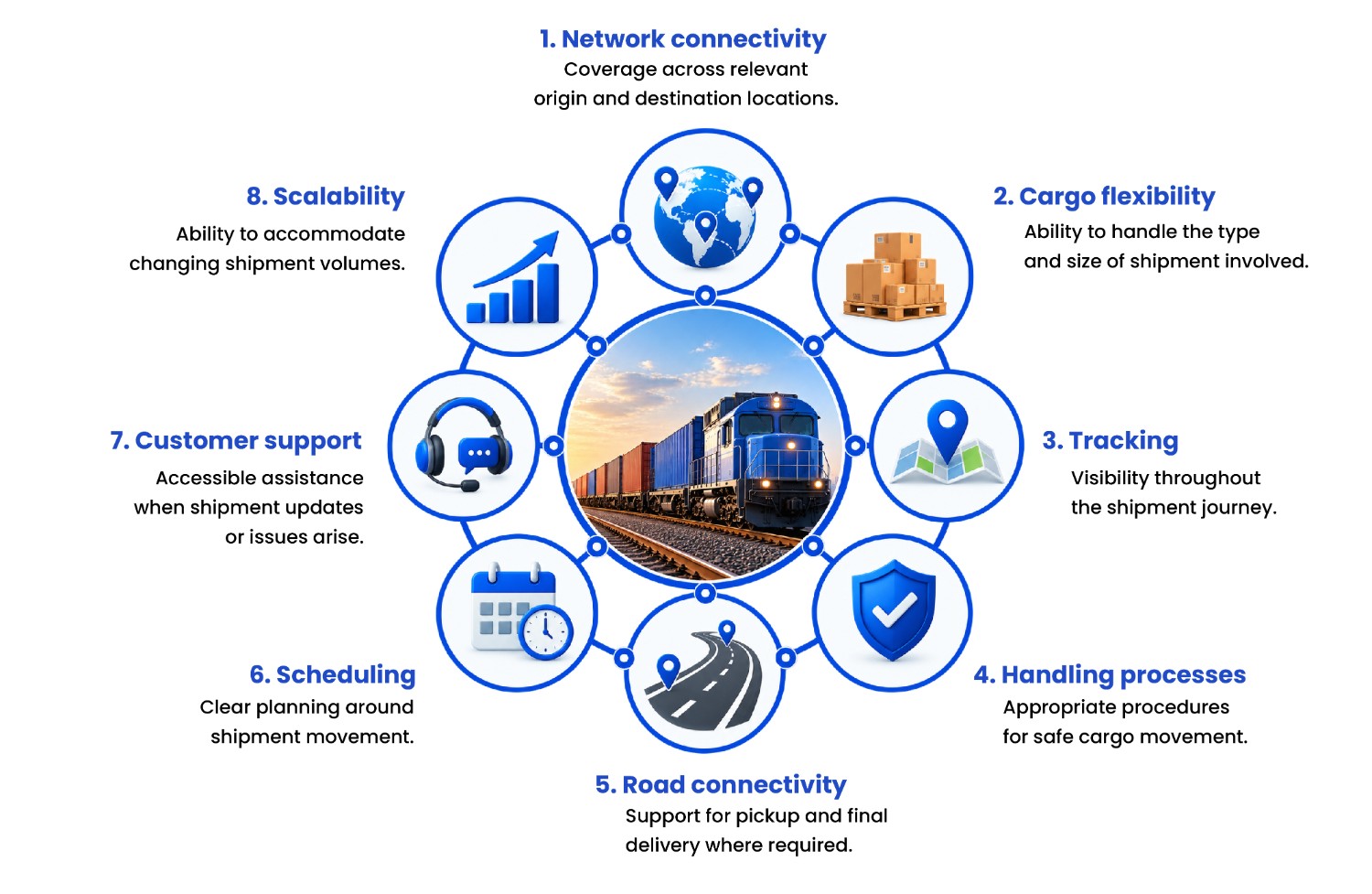
When comparing rail logistics services, businesses should evaluate more than the transportation network itself. A suitable provider should be able to support the operational requirements around the shipment.
- Network connectivity: Coverage across relevant origin and destination locations.
- Cargo flexibility: Ability to handle the type and size of shipment involved.
- Tracking: Visibility throughout the shipment journey.
- Handling processes: Appropriate procedures for safe cargo movement.
- Road connectivity: Support for pickup and final delivery where required.
- Scheduling: Clear planning around shipment movement.
- Customer support: Accessible assistance when shipment updates or issues arise.
- Scalability: Ability to accommodate changing shipment volumes.
Businesses should also check whether the provider can connect rail with other logistics requirements. This becomes important when transportation is linked with warehousing, inventory, fulfillment, or distribution.
This is particularly important for businesses that have recurring transportation requirements. A logistics provider should be able to support today's shipment without creating unnecessary coordination problems as volumes increase.
Why Integrated Rail Logistics Services Matter
The value of rail logistics services in India increases when rail is connected with the rest of the supply chain. For example, a business may need:
Pickup → Warehousing → Rail Transportation → Destination Handling → Final Delivery
This approach is also relevant when a business uses different transportation modes for different shipments. The objective is to create a transportation strategy that balances cost, delivery requirements, cargo characteristics, and operational control.
For businesses with complex supply chain transportation requirements, this integrated model can provide a clearer framework for managing movement from origin to destination.
How OnPoint Logistics Supports Rail-Based Shipments
Choosing rail is only one part of managing a long-distance shipment. OnPoint Logistics’ Train Express service supports businesses with bulk and parcel movement, real-time tracking, secure handling, automated updates, and route and schedule coordination. This helps businesses keep better visibility over their consignments while planning rail movement around their actual delivery requirements.
Rail can also work alongside other transportation and supply-chain needs rather than operating as a standalone service. With road and air transportation, 3PL, and inventory management capabilities, OnPoint Logistics can support different stages of a shipment, from transportation and warehousing to distribution and scheduled delivery, depending on the business requirement.
Final Thoughts - Making Rail a Practical Part of Your Logistics Strategy
Rail transport can be an effective option for companies looking to transport specific goods over large distances, but it must be organized correctly to be effective. Before selecting a rail alternative, businesses should carefully assess shipment needs such as type of product, route, amount of goods, timing, connectivity with terminals, and requirements for transportation from warehouse to destination.
Rail cargo transportation services involve more than the movement of goods by train. For many businesses, rail works best when it is coordinated with pickup, handling, storage, and final delivery so that each stage of the shipment stays connected.
When considering rail logistics services in India, businesses can look at the complete transportation requirement, including cargo type, route, delivery timeline, and first- and last-mile needs. With the right planning, rail can be a practical option for businesses looking to manage long-distance freight as part of a wider logistics network.
FAQs
1. What are rail logistics services in India?
Rail logistics services in India enable businesses to transport their goods through its extensive rail network for extended distances. The services offer shipment planning along with cargo handling operations and tracking systems that connect road transportation systems for both pickup and final delivery requirements.
2. When should a business consider rail logistics services?
Businesses need rail logistics services for their transportation needs when they must handle large volumes of heavy merchandise between distant locations. Rail becomes an effective transportation option when a route contains appropriate rail infrastructure, and shipments can operate according to established train schedules.
3. How does rail support long-distance transportation?
Rail enable long-distance transportation through their ability to transport massive amounts of cargo over extended rail tracks. The system operates as a functional multimodal logistics solution because it combines road transportation with its rail network for first- and last-mile delivery.
4. What types of goods can move through rail cargo transportation services?
Rail cargo transportation services support businesses in moving shipments that include bulk products, heavy materials, industrial cargo, commercial consignments, and specific parcel deliveries.
5. How do rail logistics services in India improve supply chain transportation?
Rail logistics services in India function as a core element of supply chain transportation systems because they enable operators to move cargo across long distances before switching to road transportation for pickup operations, warehousing and storage, destination processing, and ultimate shipment delivery.