What Makes Logistics Companies in Pune Essential for Supply Chain Operations?
Supply chain management includes transporting goods and materials from one place to another. Manufacturers require raw materials to arrive on time; wholesalers need continuous restocking of goods, and retailers require timely deliveries. If the supplies are not coordinated properly, even a very slight delay can disrupt the whole business operation.
The significance of this coordination has also affected India's expenditure on logistics. According to the September 2025 Assessment of Logistics Cost in India conducted by the National Council of Applied Economic Research (NCAER) for the Department for Industry and Internal Trade (DPIIT), the logistics cost for the year 2023-24 is around 7.97%. The report elaborates on logistics aspects involved with transportation, warehousing, and materials handling, thereby making them an important contributor to logistics costs.
Pune is an important illustration of the significance of effective logistics procedures. The Maharashtra Industrial Development Corporation (MIDC) has classified Pune as the biggest automotive center in India given the number of over 4,000 auxiliary and manufacturing units in the Pimpri-Chinchwad area. Such a concentration of industrial elements is dependent on the effective movement of raw materials, finished goods, and other important supplies.
This is where logistics companies in Pune play an important role in businesses. By coordinating logistics activities, including transportation, storage, inventory management, and distribution of items, they ensure the goods are moved, operational needs are managed, and continuity is maintained throughout the supply chain.
Why Is Pune's Industrial Landscape Dependent on Efficient Logistics?
Pune has become a significant hub for manufacturing, automobile production, engineering, IT, and trading. The industrial sectors and business clusters around Chakan, Pimpri-Chinchwad, Talegaon, and Ranjangaon play an important role in the commercial activity of the region.
Transportation and delivery requirements differ among industries. These requirements create several logistical challenges:
- Consistent material movement: Production facilities depend on the timely availability of raw materials, components, and other inputs.
- Inventory coordination: Businesses must maintain sufficient stock without unnecessarily increasing storage costs.
- Regional distribution: Goods need to move between manufacturing facilities, warehouses, distributors, and retail locations.
- Delivery planning: Dispatch schedules must align with production cycles, customer requirements, and receiving capacity.
- Shipment visibility: Businesses need reliable updates to monitor movement and respond to unexpected delays.
Without proper coordination, these activities can become disconnected. This makes dependable logistics infrastructure an important part of Pune's industrial and commercial ecosystem.
6 Ways Logistics Companies in Pune Support Seamless Supply Chain Operations
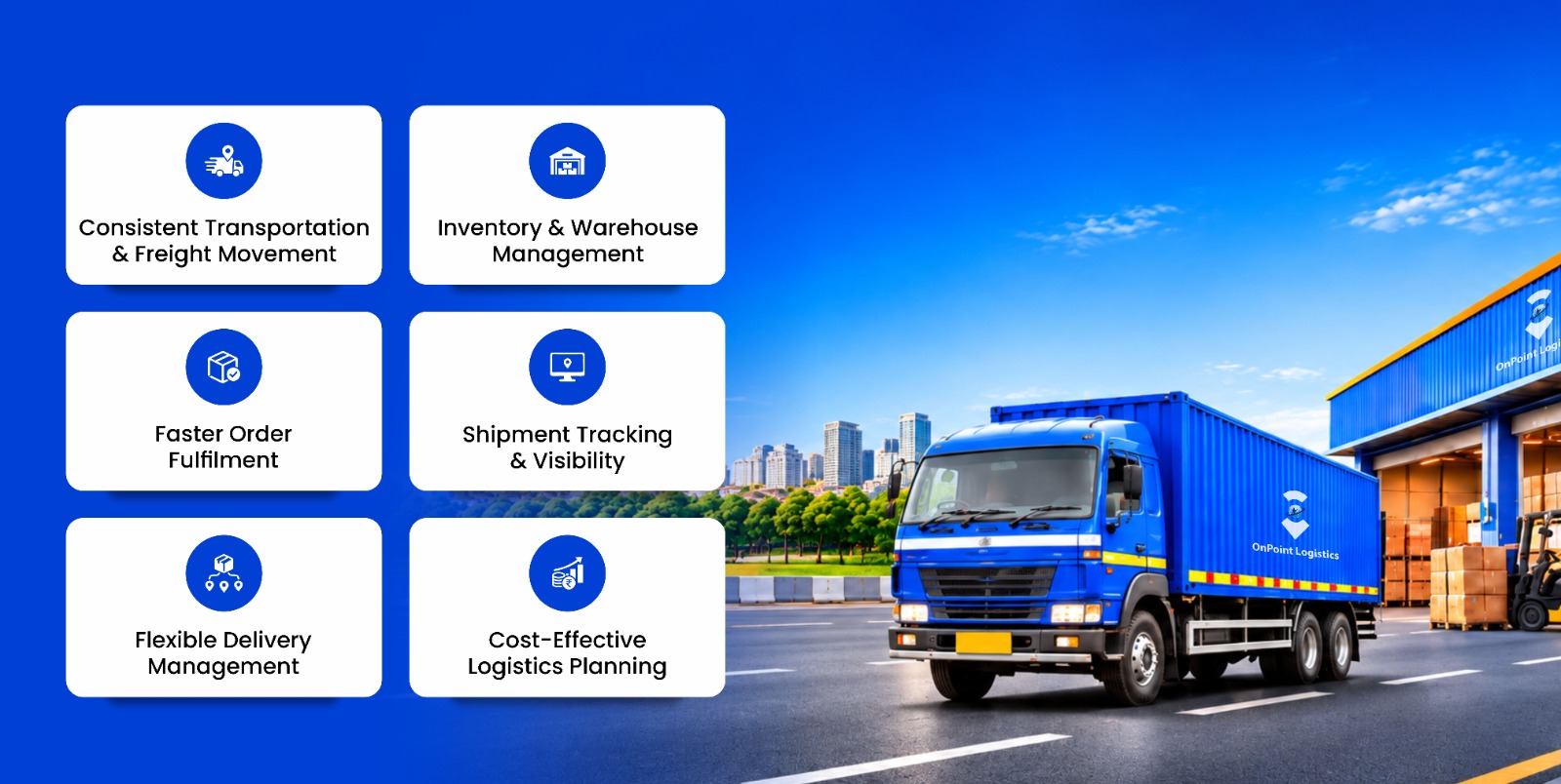
Efficient logistics involves several interconnected activities. The value of a logistics provider lies in managing these activities in a way that supports the movement of goods from their origin to the final destination.
1. Maintaining Consistent Transportation and Freight Movement
Transportation connects suppliers, manufacturers, warehouses, distributors and customers. Any disruption along this chain can affect production schedules and delivery commitments.
Businesses require different transportation arrangements depending on shipment size, distance, urgency, and cargo requirements. Full Truckload (FTL) transportation is suitable when a shipment requires the capacity of a dedicated vehicle, whereas Partial Truckload (PTL) allows businesses to transport smaller consignments without booking an entire truck.
Road transportation also supports local, regional, and long-distance freight movement. Choosing the appropriate arrangement helps businesses plan dispatches according to their operational requirements.
Experienced logistics companies in Pune can help businesses coordinate these transportation needs and maintain a more organised flow of goods across different locations.
2. Improving Inventory Management and Warehouse Coordination
Transportation alone cannot ensure an efficient supply chain. Businesses also need appropriate storage facilities and organised inventory processes to manage goods between dispatch and delivery.
Warehousing supports activities such as:
- Receiving and checking incoming goods.
- Organising products for storage.
- Monitoring stock movement and availability.
- Picking and packing orders.
- Preparing consignments for dispatch.
Poor inventory coordination can result in stock discrepancies, delayed order processing, and unnecessary storage expenses.
This is where integrated warehousing and inventory management become valuable. When stock information and distribution activities are coordinated, businesses can make better decisions about replenishment, order fulfilment, and dispatch planning.
3. Supporting Faster and More Organised Order Fulfilment
Order fulfilment involves several stages, from receiving an order to preparing and dispatching the correct products. Delays at any stage can affect customer commitments and business relationships.
For e-commerce businesses, retailers and distributors, fulfilment requires coordination between inventory availability, picking, packing and transportation.
Third-party logistics (3PL) providers can manage multiple parts of this process, allowing businesses to work with an external logistics partner instead of independently coordinating every operational activity.
For growing businesses, this approach can support changing order volumes while reducing the complexity of managing separate logistics arrangements.
4. Providing Better Shipment Visibility and Coordination
Knowing where a shipment is and when it is expected to arrive helps businesses plan their next operational steps. Without adequate shipment visibility, businesses may struggle to identify delays, communicate accurate delivery updates, or coordinate receiving activities.
Technology-supported logistics processes can improve this coordination through:
- Digital shipment tracking.
- GPS-based location updates.
- Automated notifications.
- Delivery status monitoring.
- Digital proof of delivery (POD).
These tools help businesses access shipment information and communicate more effectively with suppliers, customers, and internal teams.
For logistics companies in Pune, visibility is an important part of delivering organised transportation support, particularly when businesses manage regular shipments across multiple locations.
5. Helping Businesses Manage Different Delivery Requirements
Not every shipment follows the same delivery schedule. Some businesses need urgent transportation, while others operate through recurring dispatches or require deliveries within predetermined time slots.
Different delivery arrangements address these requirements:
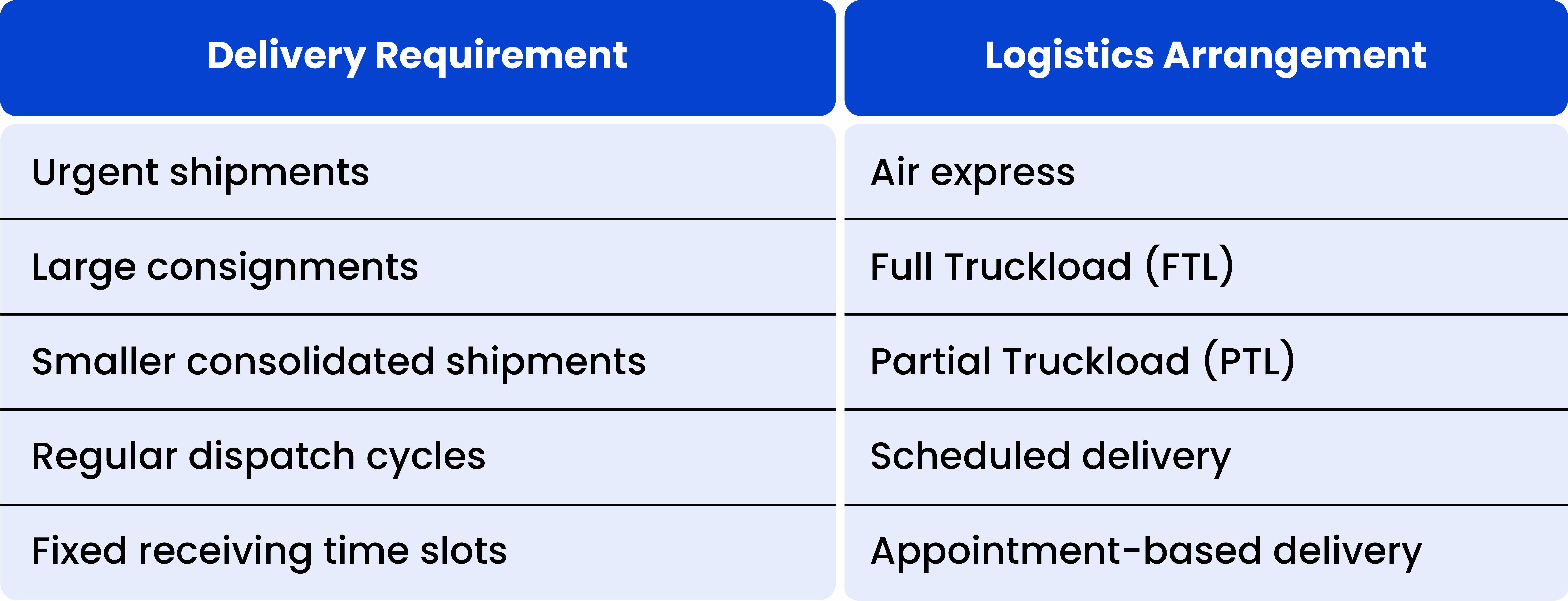
Having access to suitable delivery arrangements helps businesses coordinate transportation with their operational schedules instead of treating every shipment in the same way.
6. Improving Cost Control Through Better Logistics Planning
Logistics expenses go beyond transportation charges. Activities like warehousing, holding inventory, material handling, and poor coordination can all add up. These factors make the cost of moving goods higher than expected.
Businesses can improve cost control by looking at their logistics processes, not just the freight rates. Focusing on how goods move and are managed can make a difference. Here are some practical steps to consider:
- Selecting a mode of transport according to the volume and urgency of the shipment.
- Consolidating compatible shipments when it is operationally feasible.
- Careful planning of routes and dispatching schedules.
- Maintaining adequate stock levels.
- Minimizing unnecessary handling and movement.
- Matching warehousing to distribution requirements.
The objective is not necessarily to select the cheapest transportation option. It is to find an arrangement that balances cost, delivery expectations, cargo requirements, and operational reliability.
What Should Businesses Look for Before Choosing a Logistics Partner?
Selecting a logistics provider requires more than comparing transportation rates. Businesses need to think about whether the provider can meet their shipping needs, adapt to changes in operations, and maintain consistent communication.
Here are some key things to look at before making a choice.
1. Range of logistics services
See if the provider can provide your business with the necessary transportation, warehousing, and fulfillment services. Partnering with a provider that can coordinate several services will save more time than dealing with many different vendors.
2. Experience with relevant shipment requirements
The company that deals with industrial components is different from the business that distributes consumer goods. Take into account the previous experience of the provider related to your cargo, its volumes, and shipping schedule.
3. Tracking and communication
Find out how the provider will send you shipment information, whether it's possible to track the delivery process, and what kind of information will be provided on unexpected delays. Clear communication helps teams act quickly and make informed decisions when needed.
4. Warehouse and inventory capabilities
If your business requires storage, see how the provider handles cargo delivery, arrangement, monitoring, and dispatching. Inventory visibility and organised handling are important considerations.
5. Delivery flexibility
It's important to know if the provider can handle your routine and express shipments, bulk and scheduled deliveries if you need them.
6. Scalability and operational coordination
Your logistics demands may change as your business develops. A good logistics provider must be ready to discuss how their services can suit increasing shipping volume and distribution demand.
Businesses looking for logistics partners in Pune should consider these logistics points instead of choosing a provider based only on a single service or price comparison.
Why Integrated Logistics Matters for Growing Businesses
Managing transportation, warehousing, inventory, and fulfilment independently can create coordination gaps. Different vendors may follow separate schedules, use different reporting processes, and provide information through separate channels. This can make it difficult for businesses to maintain a clear view of their supply chain.
An integrated approach brings logistics activities into a more coordinated arrangement.
The benefits include:
- Better coordination - It will be easier to coordinate transport and warehouse operations according to common needs.
- Improved inventory visibility - Companies will be able to monitor their inventory flows and identify requirements for replenishment.
- Simplified vendor management - It will be easier to manage several logistics activities through fewer vendors.
- More organised fulfilment - It will be easier to organize storage, picking, packaging, and delivery operations.
- Greater operational flexibility - Companies will be able to review their logistics arrangements based on changing shipment volume and distribution needs.
For organisations that have multiple supply‑chain activities, integrated logistics in Pune can give a clearer way to coordinate these functions.
Integrated logistics does not automatically mean better performance. Businesses should look closely at the provider’s capabilities, communication processes, service coverage, and its ability to manage the required operations.
How OnPoint Logistics Supports Business Logistics Requirements in Pune
Businesses need logistics arrangements that account for their transportation, storage, and delivery requirements. We provide services designed to support different shipment and operational needs in Pune.
Our logistics services in Pune include parcel pickup and drop-off, road-based transportation, warehouse support, air express, 3PL and inventory management, along with scheduled and appointment-based deliveries.
These services address different stages of business logistics:
- Road transportation - Our road express offering includes PTL and FTL options, supporting businesses with different shipment volumes and transportation requirements.
- Warehousing and inventory management - Our 3PL offering covers organised storage, inventory management, shipment handling, and fulfilment support.
- Air express - Businesses with urgent shipment requirements can consider air-based transportation.
- Scheduled and appointment deliveries - These arrangements help businesses coordinate dispatches with recurring schedules and predetermined receiving slots.
- Shipment visibility - Digital tracking and shipment updates support better communication and monitoring.
Our approach is to connect the relevant logistics arrangements with the requirements of each shipment rather than treating every business requirement identically.
For companies comparing logistics companies in Pune, understanding the provider's actual service capabilities and how they fit into existing operations is an important part of making an informed decision.
Building a More Connected and Reliable Supply Chain in Pune
Smooth functioning of supply chain operations requires the continuous coordination of transport, warehousing, and inventory management processes along with distribution methods. This is related to the efficiency of different types of products being transported at the same time, as well as moving goods between suppliers, warehouses, and customers for industries in Pune, including manufacturing, retailing, e-commerce, and business.
The selection of appropriate logistics services enables the firms to fulfil shipping requirements, increase transparency, and improve the way they carry out their distribution processes. The right arrangement should reflect the nature of the goods, delivery schedules, shipment volumes, and operational priorities.
Logistics companies in Pune play an important role in connecting these activities. Businesses that evaluate service capabilities, communication, flexibility, and operational coordination can make more informed decisions about their logistics requirements.
At OnPoint Logistics, we aim to support businesses with transportation, warehousing, 3PL, and delivery solutions that address their day-to-day logistics needs.
FAQs
1. Why are logistics companies in Pune important for manufacturing businesses?
Manufacturing companies rely on the prompt supply of raw materials, parts, and final products. Logistics providers assist in transportation, storage, and distribution, thus helping in the production of goods and delivery on time.
2. How does 3PL help businesses manage supply chain operations?
Third-party logistics companies take care of business functions such as shipment, storage, inventory management, and order fulfilment. This gives companies an opportunity to outsource selected logistics functions and pay more attention to their primary business activities.
3. What is the difference between PTL and FTL transportation?
When utilizing FTL transport, a truck and its loading capacity are booked for a shipment. Meanwhile, PTL allows sending smaller goods without needing to use a whole truck. The most appropriate transport type depends on cargo volume, delivery requirements, and cost considerations.
4. How can businesses improve supply chain visibility?
Businesses can achieve better visibility with the help of digital tracking, GPS-based updates, inventory monitoring, digital updates notifying arrivals, and other tracking systems. These tools assist businesses in getting information about shipments and inventory.
5. What should businesses consider when selecting logistics services in Pune?
Businesses must look into the service availability, available transport methods, warehousing options, inventory management possibilities, tracking systems, delivery options, and fulfilling specific needs for transport. The provider should be able to support their operational needs reliably.