How Small Business Logistics Challenges Affect Customer Experience and Revenue
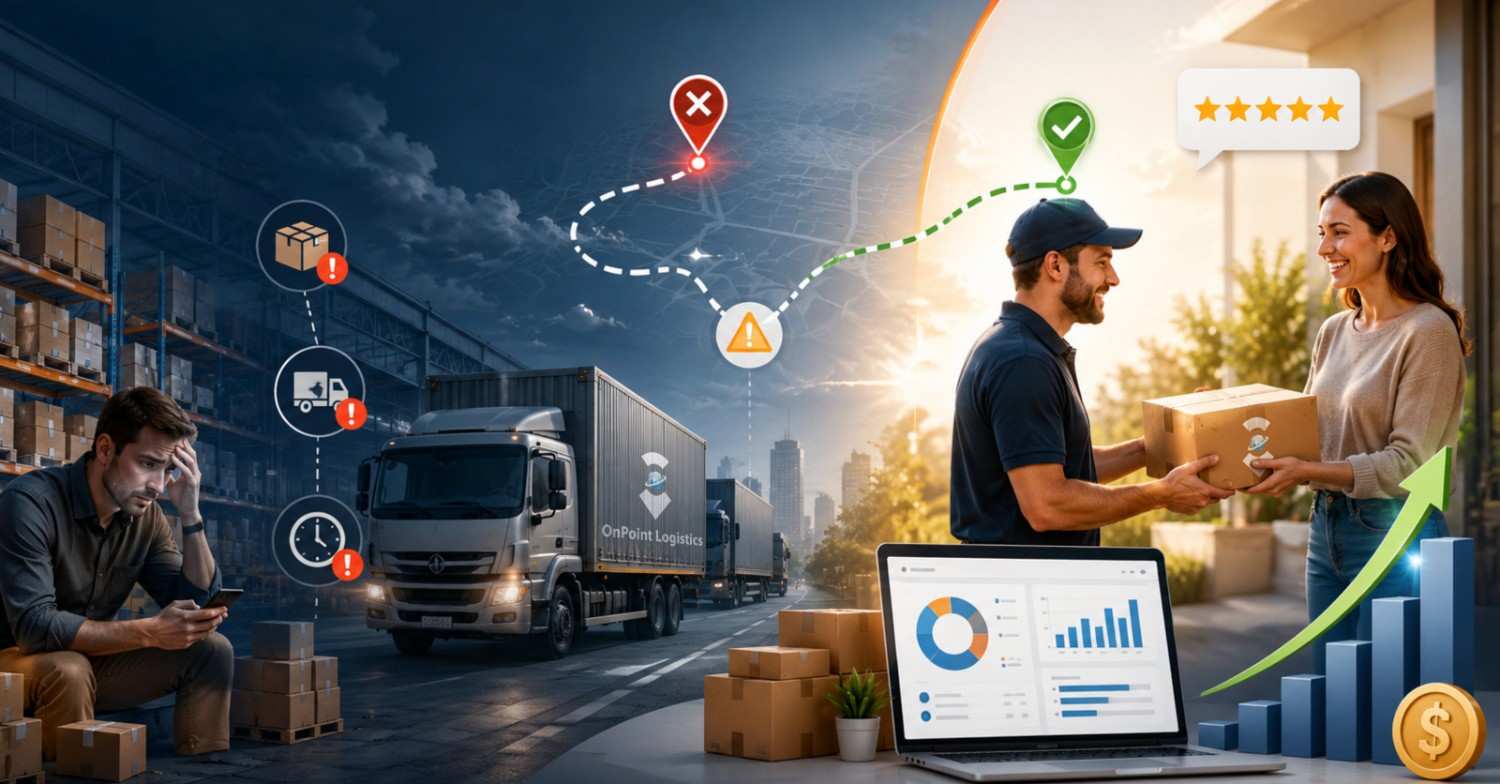
Small business logistics problems affect more than day-to-day operations. They can impact customer experience, repeat purchases, and overall business revenue. Late deliveries, damaged goods, lack of visibility about the delivery process, or even high RTO rates could immediately break down customer trust and negatively affect sales. According to the PwC 2025 Customer Experience Survey, 29% of the customers left the brand because of poor customer experience. This indicates that logistics plays a more significant role in business success than what businesses assume.
In this post, we'll look at how small business logistics challenges impact customer experience and revenue, what problems your company may struggle with, and ways to solve these challenges with the right logistics strategy and partner.
Why Small Business Logistics Challenges Go Beyond Deliveries
Most companies believe that logistics starts with the dispatch of an order and finishes with its arrival at the customer. In truth, logistics has an impact on the entire customer experience after purchase, positioning it as a key driver in customer satisfaction and business success. As per Gartner, an effective post-purchase delivery experience not only improves customer experience and brand engagement but also helps businesses save and unlock new revenue streams.
Small business logistics challenges impact much more than just delivery. They can also impact:
- Customer trust is affected when orders are delivered late or in bad condition.
- Brand reputation from negative feedback and customer complaints.
- Repeat purchase occurs when dissatisfied customers buy from other companies.
- Profitability and revenue from a high rate of return order.
- Growth of the business from logistics inefficiency that prevents scalability.
Businesses that identify these challenges in transportation and logistics early can act proactively to enhance customer experience. By providing integrated transportation, warehousing, inventory management, and shipment visibility in real time, we enable businesses to optimize the logistics and post-purchase experience.
Common Small Business Logistics Challenges That Affect Customer Experience
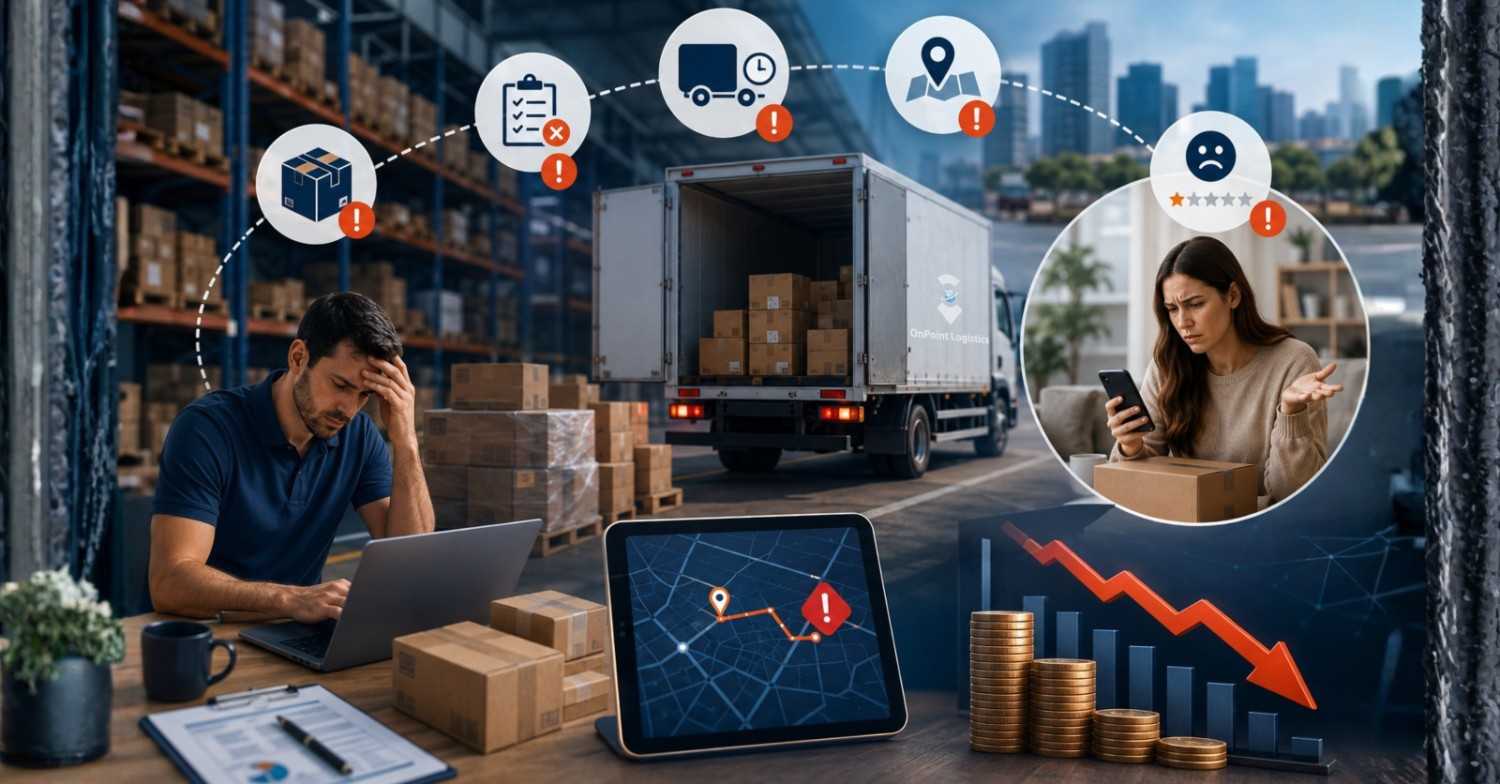
Customer experience isn't just about timely deliveries. Challenges in transportation and logistics impact the entire logistics journey and can negatively affect customer satisfaction, brand reputation, repeat purchases, and future business growth. Here are a few of the most common small business logistics challenges:
Late Deliveries Break Customer Expectations
Customers anticipate punctual delivery, and delays are immediately reflected in their experience. One of the biggest challenges in transportation and logistics, delayed deliveries normally lead to negative ratings, lower customer confidence, and fewer repeat purchases.
Damaged Shipments Affect Brand Perception
Customers relate the state of the product to the brand rather than the logistics operation. The higher incidence of damaged shipments results in more returns, replacements, and decreased customer confidence.
Poor Shipment Visibility Creates Uncertainty
The customer expects updates during the whole delivery process. Shipment visibility helps reduce uncertainties and increase the reliability of delivery services.
High RTO Rates Increase Costs and Customer Frustration
No-shows and Return-to-Origin (RTO) orders cause high logistics costs, problematic fulfillment, and bad customer experience.
Fragmented Logistics Makes Growth Difficult
The failure to deliver parcels and the RTOs contribute to increased logistics costs, logistical disruption and a poor customer experience. As order volumes increase, the challenges in the logistics industry become increasingly difficult to mitigate, and they affect operating efficiency and the customer experience.
How Poor Logistics Affects Customer Trust and Revenue
Logistics problems affect not only delivery but also how customers will perceive your brand. The majority of small business logistics challenges begin as operations issues that quickly evolve into customer experience issues. In most cases, customers tend to blame your brand rather than the shipping process for a delayed shipment, a damaged product, or a lack of shipment visibility.
The effect is not limited to one order alone. One of the many common challenges in the logistics industry could result in:
- Lower customer trust and satisfaction
- Negative reviews and a weaker brand reputation
- Fewer repeat purchases and customer referrals
- Higher returns, RTO rates, and operational costs
- Slower business growth and reduced revenue
This is the reason why logistics should be seen as a business growth activity instead of a mere delivery activity. Companies that set up dependable, integrated logistics services are more capable of providing consistent customer experiences, enhancing customer loyalty, and realizing successful growth.
Signs It's Time to Rethink Your Logistics Strategy
Consistent delivery delays, shipping damage, and high RTOs are red flags indicating you should look at your logistics approach. These problems usually mean that something is not working properly in terms of logistics.
Early recognition of these symptoms enables companies to respond to them before they affect customer trust and revenue. Improving logistics processes or partnering with an experienced third-party logistics services provider can help your company overcome logistics challenges and help create a more reliable delivery experience.
How to Overcome Logistics Challenges and Improve Customer Experience
Knowing how to overcome logistics challenges is not about solving single problems; it is about building a connected logistics process that enhances visibility, coordination, and provides a consistent customer experience.
Improve Visibility Across the Delivery Journey
Providing real-time shipment visibility to customers gives them peace of mind, reduces uncertainty, and allows businesses to quickly react to unforeseen delivery delays.
Reduce Gaps Between Logistics Operations
Improved coordination between transportation, inventory, and warehouse operations ensures greater efficiency and a smoother delivery experience.
Focus on Reliable Delivery Execution
Proactive planning, standardized solutions, and efficient transport can help to eliminate the operational risk and enhance the customer experience.
Partner with the Right Logistics Expert
Choosing a seasoned third-party logistics service provider is one of the most effective ways to tackle logistics problems. We combine transportation, warehousing, inventory management, and real-time shipment visibility to help businesses deliver a reliable customer experience.
Choosing the Right Third-Party Logistics Service Provider
Choosing a third-party logistics services provider is more than just moving your shipments. You want a company that can streamline your processes, increase your delivery performance, and grow with your business.
A reliable logistics partner should offer:
- End-to-end logistics solutions for seamless operations.
- Real-time shipment visibility for better tracking and transparency.
- Reliable transportation to support on-time deliveries.
- Integrated warehousing and inventory management for better coordination.
- Scalable logistics support that grows with your business.
- Proactive operational support to resolve issues quickly.
We bring these capabilities together to help businesses overcome complex logistics challenges, enhance customer experience and create a resilient supply chain.
Conclusion
Logistics for small businesses has evolved from merely transporting the products to actually creating memorable experiences for the customers. From delayed shipments and damaged packages to poor tracking and high rates of return, small business logistics challenges are subtle and can slowly erode customer trust, repeat purchases, and business sustainability.
OnPoint Logistics works with businesses to overcome logistics challenges through integrated transportation, inventory, warehousing, and real-time shipment visibility. By reducing the complexity of logistics and boosting the performance of delivery, we enable companies to provide a better customer experience and construct supply chains for long-term growth.
FAQs
1. What are the common small business logistics challenges?
The major challenges include delayed delivery, damaged goods in shipment, low shipment visibility, and high RTO rate, which can negatively affect customer satisfaction and business growth.
2. How can businesses overcome logistics challenges?
Businesses can address logistics challenges by improving shipment visibility, enhancing logistics planning, and partnering with a proven logistics partner for reliable operations.
3. What should businesses look for in a third-party logistics service provider?
A trusted third-party logistics service provider should provide transportation, warehousing, inventory control, real-time shipment visibility, and flexible logistics.
4. What are the key challenges in the logistics industry?
Major logistic challenges consist of rising costs, delayed deliveries, lack of shipment visibility, and rising customer expectations.
5. What are the common challenges faced by the logistics industry in India?
Some of the challenges faced by the logistics industry in India are fragmentation of the supply chain, higher transportation costs, inefficient delivery, and increased demand for quicker and more reliable delivery services.