Common Challenges in Last Mile Delivery Services & Their Solutions
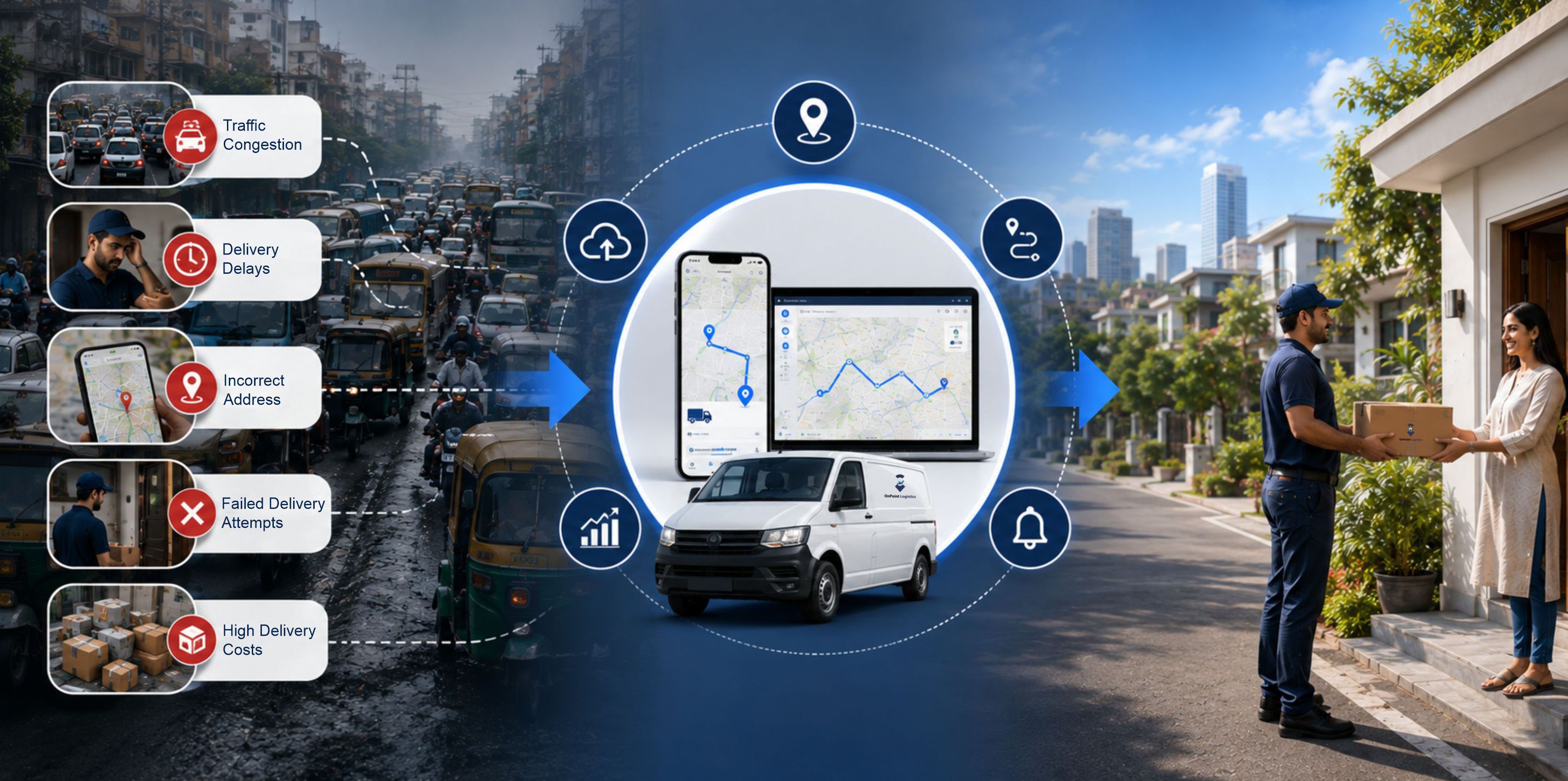
Last-mile delivery is one of the most significant stages of the logistics process. It is the final movement of goods from a warehouse to the customer's final destination. Due to the rapid development of eCommerce, fast and effective delivery is vital to ensure customer satisfaction. But there are many difficulties that businesses may encounter, like high prices, traffic, delivery delays, ineffective route planning, and failed delivery. Last-mile delivery services can assist businesses in overcoming all these difficulties using proper route planning and logistics solutions.
What is last-mile delivery?
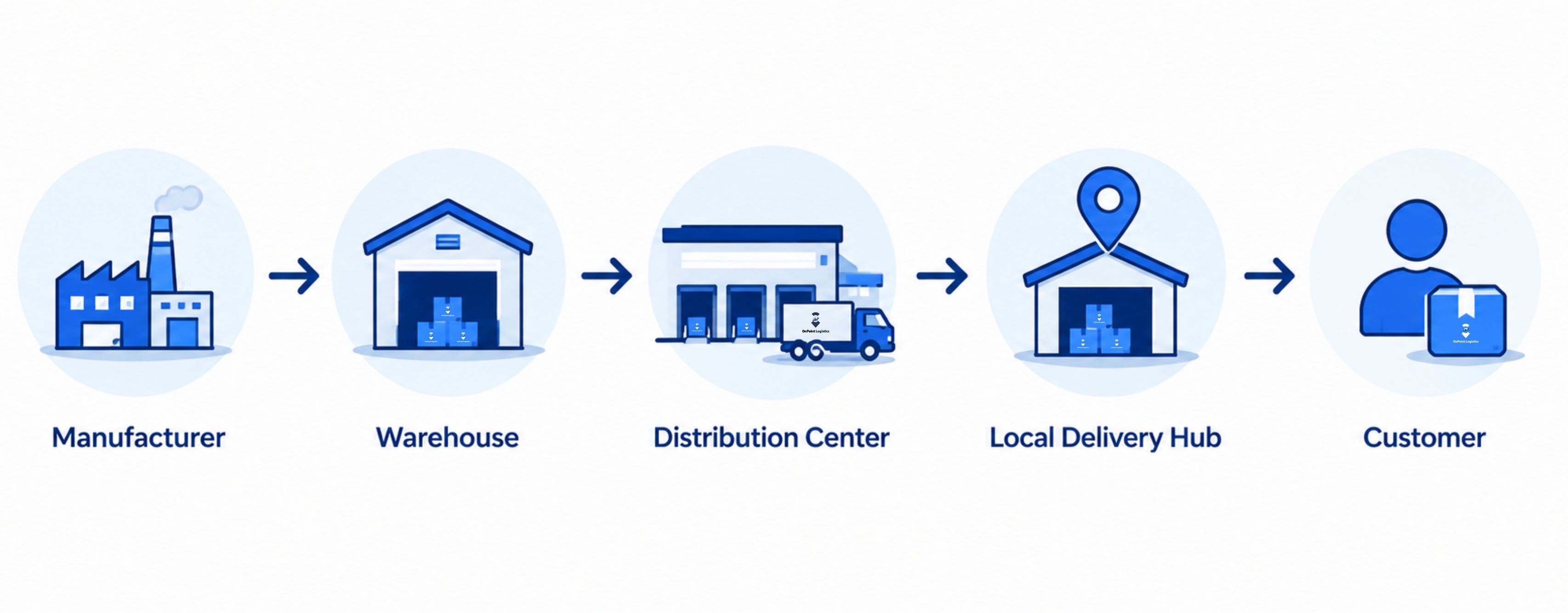
Last-mile delivery is the final stage of the supply chain where goods are transported from a warehouse, fulfillment center, distribution hub, or local delivery facility to the customer's final destination.
The final destination may include:
- A residential address
- A business location
- A retail store
- A pickup point
- A distribution location
Although it is called the "last mile," the actual distance can vary. The term refers to the final leg of the delivery journey rather than a specific physical distance. Reliable last-mile delivery plays an important role in ensuring that products reach customers safely, within the expected timeframe, and with sufficient shipment visibility.
Why Is Last-Mile Delivery Important?
Last-mile delivery is important because it directly affects both business operations and the customer experience. For many customers, the delivery stage is one of their final interactions with a brand. A delayed, damaged, or missed delivery can negatively affect the overall customer experience, even when the product itself meets expectations.
The last-mile delivery strategy can help businesses:
- Improve delivery speed
- Reduce unnecessary transportation costs
- Minimize failed delivery attempts
- Improve shipment visibility
- Support scheduled and time-sensitive deliveries
- Improve customer satisfaction
- Reduce operational inefficiencies
- Build greater trust in the delivery experience
Last-mile delivery Process
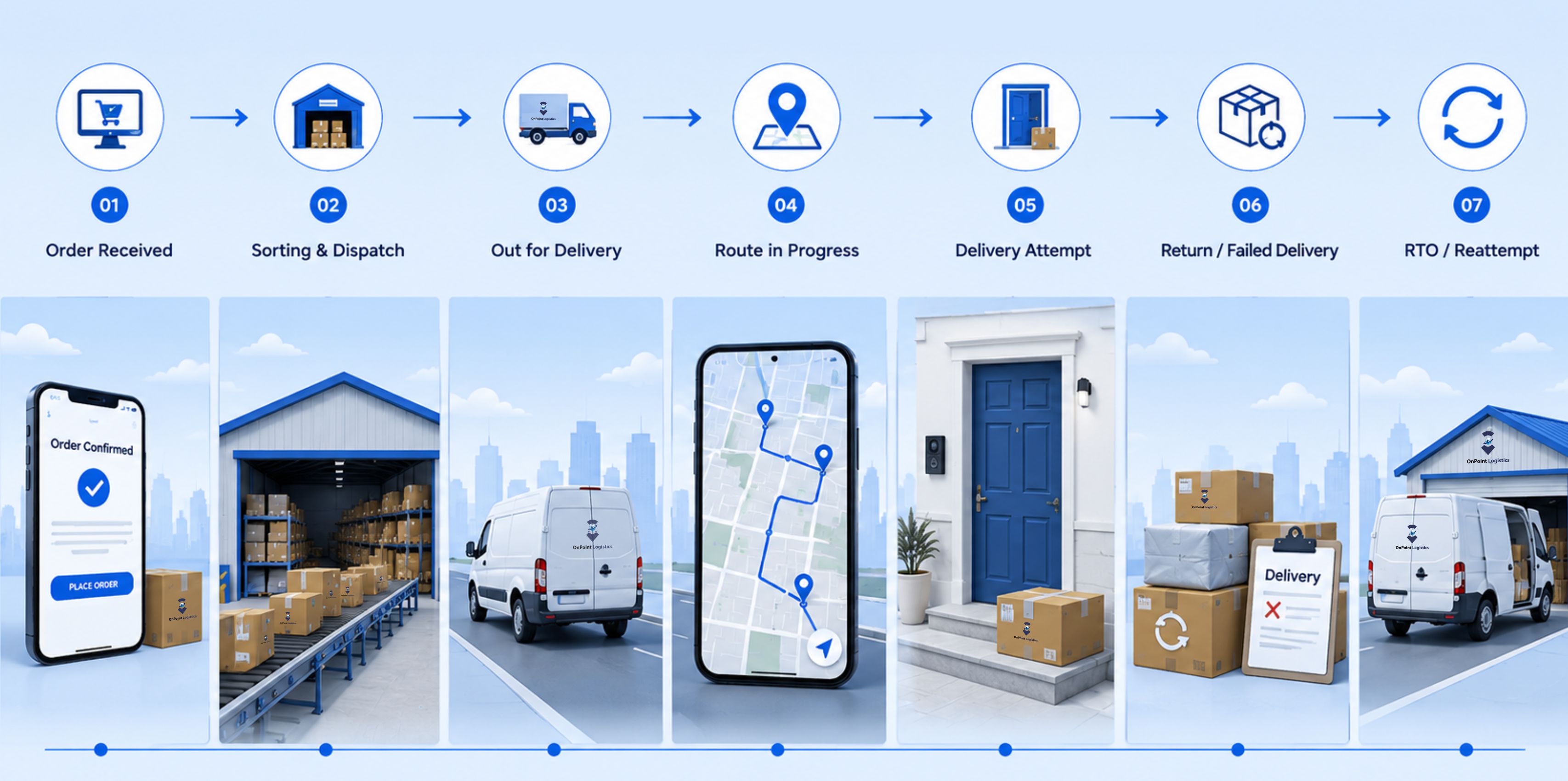
The last-mile delivery process has a few steps that help get an order from the warehouse to the customer. Each step helps make sure the order is delivered quickly, safely, and on time.
1. Order Processing
Once an order has been placed by a customer, the delivery process starts. Orders are received in the warehouse or distribution center according to their destination, delivery time, and mode of transport. Once everything is checked and packed, the order is ready to be dispatched.
2. Dispatching and Routing
After the order is ready, it is sent out from the distribution center by delivery vehicles. The people delivering the order also find the route to take. They think about how much the vehicle can carry, what needs to be delivered, and what the traffic is like.
Efficient last-mile transportation can assist in route optimization and eliminate unnecessary trips.
3. Tracking
Tracking the order is very important. The delivery vehicles have GPS devices that track their location and performance. This way, the order and delivery process can be monitored in real time. The tracking also tells the customer where their order is, when it will arrive, and if there are any problems.
4. Delivery
In this part, the delivery people follow the route to get the order to where it needs to go. They deliver the order at the time the customer chose. The customer or the person getting the order also signs for it so we know it was delivered safely.
Reliable doorstep delivery services can ensure that this is made easy for the consumers while helping companies enhance their delivery process as well.
5. Customer’s Feedback and Follow-Up
After delivering the order efficiently, the final step is to collect feedback from customers about the delivery experience. Getting feedback from customers about their delivery experience helps companies that deliver packages figure out what they can do better.
6. Failed Delivery
A failed delivery happens when an order cannot be delivered due to customer unavailability, an incorrect address, restricted access, or delivery refusal.
Reducing failed deliveries through better communication and address verification can help control costs and delays.
7. RTO or Reattempt
After a failed delivery, the order may be reattempted at another suitable time.
If delivery remains unsuccessful or the order is refused, it may be sent back to the seller or warehouse through the Return to Origin (RTO) process.
What is the last-mile delivery problem?
The last-mile delivery problem occurs due to the operational challenges involved in efficiently delivering individual shipments from a warehouse, distribution center, or local delivery hub to multiple final destinations.
Unlike long-distance transportation, last-mile operations often involve multiple stops, different delivery locations, changing traffic conditions, and individual customer requirements.
Common factors that participate in the last-mile delivery problem include the following:
- Multiple delivery stops
- High transportation costs
- Traffic congestion
- Incorrect or incomplete addresses
- Failed delivery attempts
- Customer availability issues
- Limited delivery visibility
- Changing delivery schedules
- Remote or difficult-to-access locations
Key Challenges of Last-Mile Delivery
Last-mile delivery comes with several challenges that can affect both businesses and customers. These problems can make delivery costs go up, cause things to be late, and make it hard to get things to people on time. Companies have to deal with a lot of things. Here are some of the problems with last mile delivery services.
1. Rising Delivery Costs
Last-mile delivery is usually the expensive part of the delivery process. Higher fuel prices, higher driver wages, vehicle repairs, and other costs can make delivery more expensive. Delays, deliveries, and canceled orders can create more hidden costs. To stay profitable, companies must plan routes, cut down on extra trips, and use good delivery management systems. Choosing the right last mile delivery company can also help businesses manage operational costs more effectively.
2. Delivery Delays and Traffic Challenges
Traffic road blockages, bad roads, and faraway places can cause delays in delivering goods, which results in money spent and customers who are not satisfied.
Businesses that offer same-day last-mile delivery must have efficient routing, real-time tracking, and well-planned delivery operations to minimize delays.
3. Parcel Security and Theft
The safety of packages during the part of the delivery process is a big problem. Packages can be taken, lost, broken, or given to the wrong people, which causes money loss and unhappy customers. These problems can also hurt the company's reputation. Make people lose trust in the company.
Good tracking systems and ways to confirm delivery, along with last mile delivery services, can help businesses make their shipments safer.
4. Route And Location Challenges
Deliveries can be really slow and costly when the routes are not planned well. Things like traffic and being in an area can make this happen. Bad roads and not being able to connect with people can also cause things to be late and make the business spend money on fuel and other things.
Effective route optimization and better last-mile transportation planning can help businesses reduce unnecessary travel and improve delivery efficiency.
5. Scheduling & Real-Time Tracking
Keeping track of delivery schedules and letting customers know what is happening can be hard, especially when dealing with faraway places and tough roads. Things like traffic changes in the route or problems during delivery can cause delays and make it harder to get things done on time.
Real-time tracking, scheduling, and finding the best routes help companies watch orders and handle deliveries better and let customers know what is going on.
Such features are required to provide reliable last mile delivery services.
6. Environmental Impact
Last mile delivery has been known to create issues such as pollution due to the use of fuel-powered vehicles. With the increase in demand for delivery services to homes, there is the need for companies to consider environmental impacts while delivering goods.
7. Reverse Logistics & Returns
It becomes difficult for delivery companies to deal with reverse logistics since it entails a lot of effort from an operational perspective. It simply means that when customers decide to return a product, the logistics company must be ready to handle the flow of the product in the reverse direction.
The process of logistics has contributed to making the process of last-mile delivery very challenging for companies because it increases delivery costs and impacts inventory management and customer satisfaction levels.
Solutions to improve Last Mile Delivery Logistics
There are various solutions that businesses can adopt to make last mile delivery services faster, smoother, and more efficient.
1. Route Optimization and Dynamic Planning
Route optimization helps delivery staff in planning their routes based on such considerations as distance, traffic conditions, number of stops, delivery times, and road conditions. Dynamic route planning provides additional efficiency in delivery by enabling changes to the routes on the spot, whenever needed.
2. Real-time Tracking & Transparency
Real-time tracking assists businesses in following the whereabouts of the shipment at each stage of delivery. Tools such as tracking, delivery notifications, text messages, and email updates provide transparency and enable communication regarding the status of the order.
3. Smart Warehousing
This concept is about the implementation of technology, whereby the warehouse processes are improved. Consequently, there is efficiency in managing the stock and reduced processing time. Therefore, the company will be able to process orders quickly.
Errors can be minimized in the use of RFID technology, bar code technology, and automation.
4. Investment in Technologies
The employment of technologies can significantly enhance the process of delivery. With the help of real-time tracking, GPS, vehicle management, and telematics, firms will be able to control and optimize the process of delivery.
But then, as companies already implement same-day last-mile delivery technology, there might be an excellent opportunity to apply these systems
5. Collaborations
Businesses can partner with third party logistic companies, local couriers, and other delivery agents. These partnerships will give the firms additional capacity, enabling them to better meet customers' requirements.
A partnership with the right last mile delivery company will enable businesses to have access to various capabilities in terms of delivery.
6. Flexible Delivery Options
The customer's preferences could depend upon the delivery availability and requirements. Flexible options could include:
Scheduled delivery
Delivery slots
Same-day delivery
Pick-up points
Re-scheduled delivery
Flexible doorstep delivery services and convenient delivery options could help increase the satisfaction level of customers while providing more flexibility to the company regarding their delivery process.
Top Industries Benefiting From Last-Mile Delivery Services
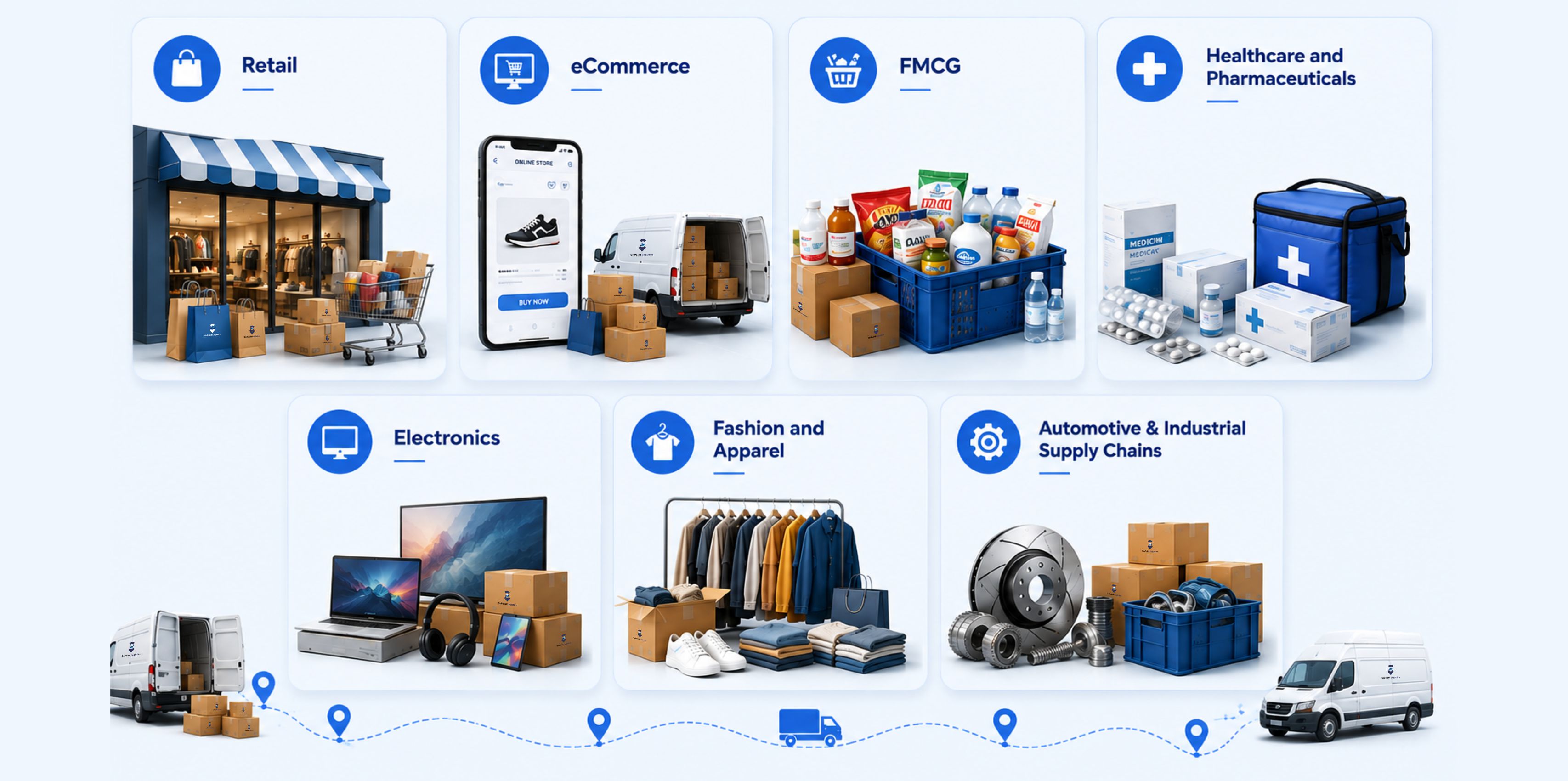
Last-mile logistics may benefit various businesses from different industries.
1. Retail
Retail stores could require delivery services for online purchases, restocking of inventory at retail stores, and delivery to customers.
2. eCommerce
Online retail stores could require dependable delivery services to deliver the goods to the customers.
3. FMCG
Product delivery services and effective distribution services could be required for FMCG deliveries.
4. Healthcare and Pharmaceuticals
Timely and well-managed transport could be necessary for certain healthcare and pharmaceutical deliveries.
5. Electronics
The safe delivery of goods is crucial for electronics delivery.
6. Fashion and Apparel
Deliveries and reverse logistics could be necessary for fashion firms.
7. Automotive & Industrial Supply Chains
Delivery of parts to service centers, warehouses, and consumers may be required.
Conclusion
Last-mile delivery services play a vital role in modern eCommerce and logistics operations. Challenges such as rising delivery costs, traffic congestion, failed deliveries, inaccurate addresses, and limited tracking can impact efficiency and customer satisfaction.
Businesses can overcome these challenges through route optimization, real-time tracking, efficient fulfillment, flexible delivery options, and reliable logistics partnerships. A well-planned last-mile strategy helps reduce costs, improve delivery performance, increase visibility, and create a better customer experience.
At OnPoint Logistics, we provide reliable and efficient logistics solutions that help businesses overcome last-mile delivery challenges, reduce delays, and improve customer satisfaction.
FAQs
1. What is meant by last mile delivery services?
Last mile delivery service means the delivery of goods from the warehouses or distribution centers to the customer's doorstep.
2. Why is last mile delivery vital for any business?
Last mile delivery is essential since it determines customer experience, delivery cost, and reputation.
3. How do I improve my last-mile delivery?
To make your last-mile delivery better, you should keep the warehouses closer to customers, use an efficient route, and provide real-time tracking. Working with a reputable third-party logistics company such as OnPoint Logistics will assist to reduce delivery costs and increase delivery speed.
4. What are the main challenges related to last mile delivery?
The main challenges consist of increasing delivery costs, traffic issues, delays in delivery, ineffective routes, loss/damage of the parcel, absence of real-time tracking, environmental concerns, and reverse logistics.
5. What measures can be taken by the businesses to minimize their last-mile delivery costs?
Measures that include route optimization, real-time tracking, smart warehousing/inventory, and delivery management technologies can be used to minimize last mile delivery costs.
Choosing a reliable last-mile delivery company like OnPoint Logistics can be helpful too.