Air Freight Shipping Services - A Practical Guide for Businesses
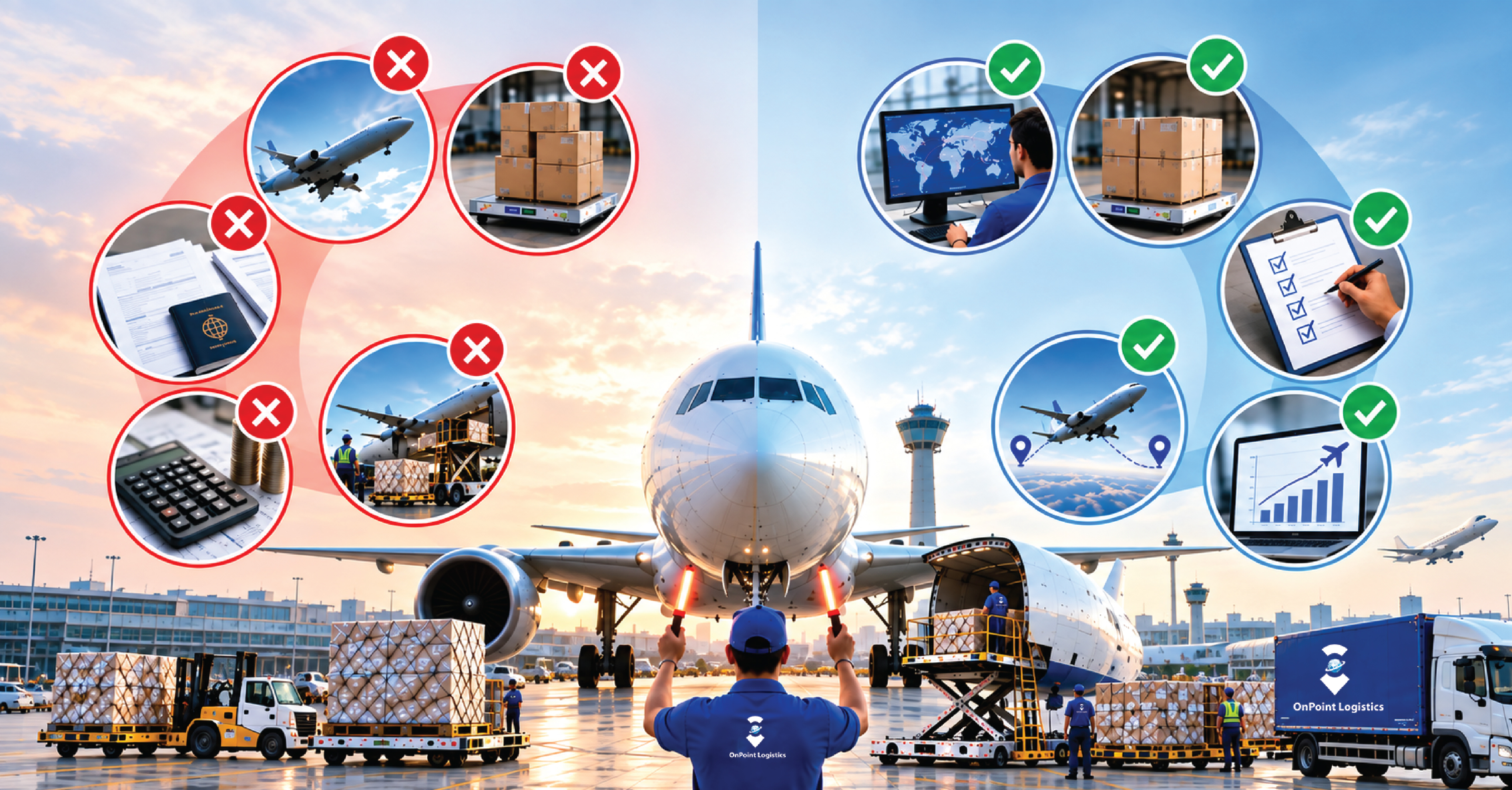
Business transportation speed emerges as a vital operational matter when manufacturing operations require essential components and customer orders have unchangeable shipping deadlines and product launches need to stay on track.
Air freight shipping services function as an essential solution that organizations need to access at this particular stage. Businesses can choose air transportation for international delivery because it offers faster delivery times than ocean freight, but speed alone does not determine whether air freight is the right choice.
The better question is: Does the value of faster delivery justify the additional transportation cost?
For logistics managers and supply chain teams, answering that question requires looking at shipment value, urgency, weight, dimensions, destination, customs requirements, and the financial impact of delays.
This guide explains how air freight works, when businesses should use it, what influences cost, and how to evaluate air freight logistics companies for reliable international shipping.
What Are Air Freight Shipping Services?
Air freight shipping services involve transporting commercial goods by aircraft, typically through a combination of airport handling, customs clearance, carrier coordination, and final-mile delivery.
A business may use air freight for a single urgent shipment or as part of a broader international supply chain strategy.
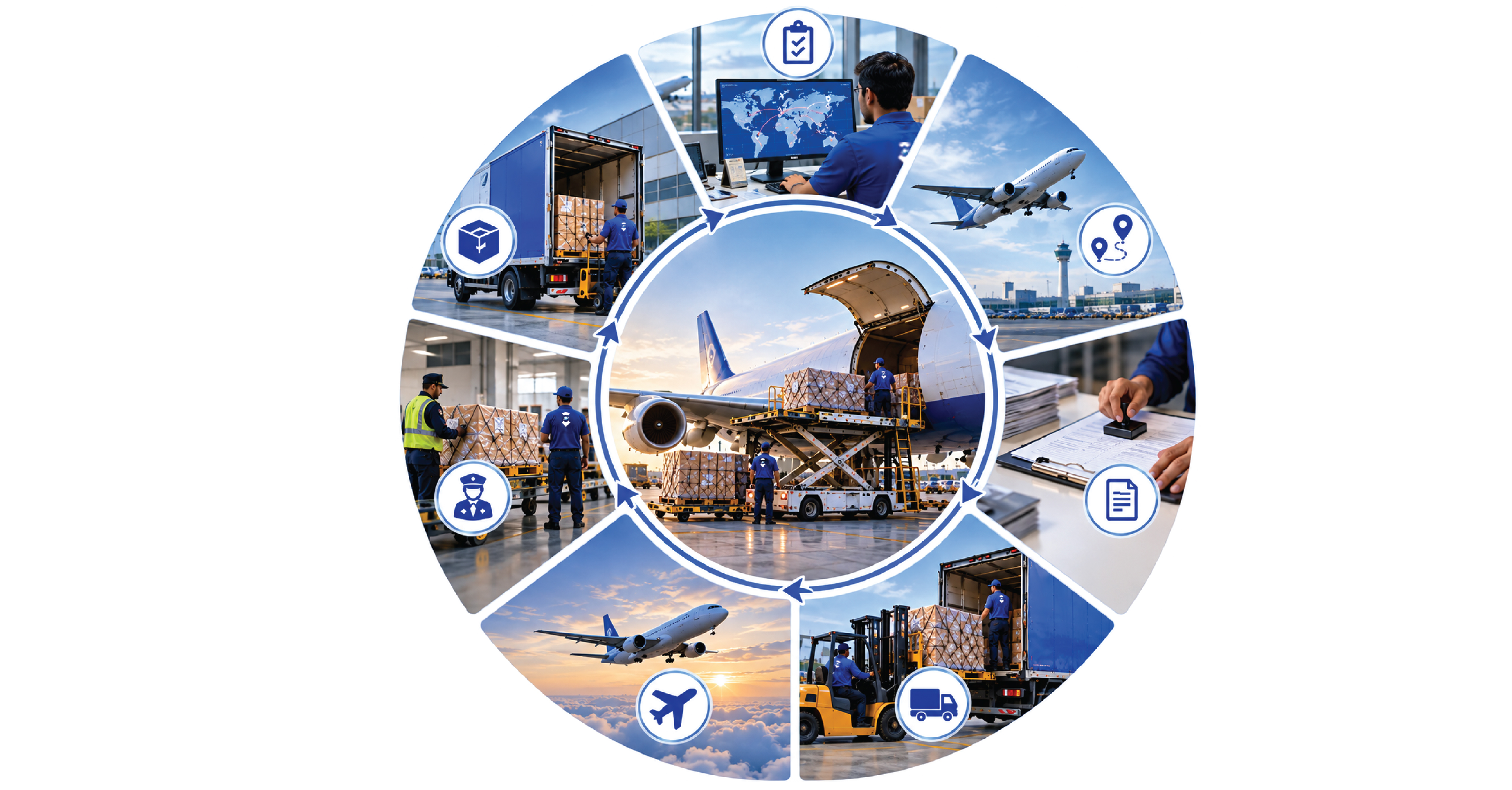
A professional air freight service can include:
- Pickup from the supplier or warehouse
- Cargo preparation and handling
- Booking with an airline or freight carrier
- Export documentation
- Security and airport processing
- Air transportation
- Import customs clearance
- Destination handling
- Final-mile delivery
This distinction matters because arranging the flight is only one part of the shipment. A cargo delay at customs, incomplete documentation, or missed connection can eliminate the time advantage businesses expected from air transportation.
For this reason, effective air freight management focuses on the entire shipment journey, rather than the flight alone.
When Should a Business Choose Air Freight?
Air freight generally makes the most sense when delivery speed has a meaningful business or financial impact.
Time-Critical Shipments
Some shipments cannot wait for conventional ocean freight schedules such as:
- Urgent production components
- Replacement machinery parts
- Critical spare parts
- Time-sensitive samples
- Emergency inventory replenishment
- High-priority customer orders
If a missing component could stop production for several days, the cost of downtime may be considerably higher than the premium paid for faster transportation.
High-Value, Low-Volume Goods
Air freight can also be appropriate for products that have a relatively high value compared with their physical weight.
Electronics, specialized equipment, precision components, and certain industrial products can fall into this category.
For these shipments, reducing transit time can also reduce the amount of inventory tied up in transportation.
Products With Short Commercial Lifecycles
Some products lose commercial value quickly.
Seasonal merchandise, fashion products, promotional materials, and products associated with a specific launch date may have limited windows in which they generate revenue.
In such cases, a lower freight cost is not necessarily the cheapest overall option if slower transportation causes the shipment to miss its market opportunity.
When the Cost of Delay Is High
One of the most practical ways to evaluate air freight is to look beyond the shipping price and consider the cost of a delayed delivery. Instead of asking only, “How much does air freight cost?” businesses should also ask, “What would a delay cost the business?” A late shipment could lead to production downtime, lost sales, customer penalties, emergency procurement, inventory shortages, or even damage to customer relationships. When these potential losses are greater than the additional cost of faster transportation, air freight can become a commercially sensible choice.
Air Cargo Logistics vs. Air Express Logistics: What's the Difference?
The terms air cargo logistics and air express logistics are sometimes used interchangeably, but they can represent different service requirements.
Air Cargo Logistics
Air cargo logistics is generally suited to planned commercial freight movements where businesses need coordinated transportation between international locations.
It may involve:
- Larger commercial shipments
- Consolidated cargo
- Regular international movements
- Airport-to-airport transportation
- Door-to-door freight coordination
- Specialized cargo handling
Businesses with recurring import and export requirements may use air cargo logistics as part of their broader supply chain.
Air Express Logistics
Air express logistics is typically focused on speed and convenience for smaller or highly time-sensitive shipments.
This can include documents, samples, replacement parts, small parcels, and urgent commercial shipments.
The service model often emphasizes rapid pickup, transportation, customs processing, and delivery.
Which Service Should Your Business Use?
There is no universal answer.
Consider four factors:
Urgency: How quickly does the shipment need to arrive?
Shipment profile: What are the weight, dimensions, value, and characteristics of the cargo?
Destination: What routes and flight schedules are available?
Delivery requirement: Is airport-to-airport movement sufficient, or is door-to-door delivery required?
A logistics provider should be able to recommend the appropriate service rather than automatically placing every urgent shipment into the most expensive express option.
How the Air Freight Logistics Process Works
Understanding the process helps businesses identify where delays and unexpected costs can occur.
1. Shipment Assessment
The process starts with basic shipment information:
- Origin
- Destination
- Weight
- Dimensions
- Cargo type
- Required delivery date
- Packaging
- Special handling requirements
This information helps determine routing, service options, and the likely transportation cost.
2. Booking and Route Planning
The logistics provider evaluates available flights and carrier options.
Depending on the destination, a shipment may travel through a direct flight or one or more connecting airports.
The fastest route is not always the most practical route. Flight frequency, capacity, connections, and customs requirements can all influence the final transit time.
3. Documentation and Compliance
International air shipments require accurate documentation.
Depending on the shipment and countries involved, documentation may include commercial invoices, packing lists, air waybills, permits, certificates, and customs information.
Errors at this stage can create delays after the cargo has already reached the airport.
4. Pickup and Origin Handling
The cargo is collected from the supplier, manufacturer, warehouse, or designated pickup location.
It then undergoes the required handling and security processes before being accepted for air transportation.
Proper packaging is particularly important because cargo can pass through several handling points during its journey.
5. Air Transportation
Once accepted by the carrier, the shipment moves according to its booked routing.
Tracking and milestone visibility are valuable at this stage because businesses can identify delays or changes before they affect downstream operations.
6. Customs Clearance and Destination Handling
Arrival at the destination airport does not necessarily mean the shipment is ready for delivery.
Import clearance, duties and taxes where applicable, documentation checks, and destination handling may still need to be completed.
Effective air freight logistics therefore requires coordination between transportation and customs processes.
7. Final-Mile Delivery
For door-to-door shipments, the final stage is delivery to the customer's facility, warehouse, distribution center, or other designated location.
A shipment should be considered successful when it reaches its intended destination within the agreed service requirements, not simply when it lands at an airport.
What Determines Air Freight Costs?
Air freight pricing is influenced by several variables, so a simple price-per-kilogram comparison can be misleading.
Important cost factors include:
- Actual shipment weight
- Volumetric or dimensional weight
- Origin and destination
- Flight routing
- Service level
- Fuel and other applicable surcharges
- Airport handling
- Customs-related costs
- Special cargo requirements
- Final-mile delivery
- Market capacity and timing
Actual Weight vs. Volumetric Weight
One of the most important concepts in air freight is chargeable weight.
A shipment may be physically light but occupy substantial aircraft space. In such cases, the carrier may calculate its price using volumetric weight rather than actual weight.
A commonly used calculation is based on:
Length × Width × Height ÷ Applicable Dimensional Factor
The applicable dimensional factor can vary by carrier and service, so businesses should confirm the calculation used for their shipment.
How Businesses Can Control Air Freight Costs
Cost management does not necessarily mean avoiding air freight. It means using it selectively.
Businesses can consider:
- Consolidating compatible shipments
- Reviewing packaging dimensions
- Avoiding unnecessary express services
- Planning non-urgent shipments ahead of time
- Comparing routing alternatives
- Preparing customs documentation before shipment
- Selecting the appropriate delivery service
Most importantly, compare total logistics cost, not just the transportation quote.
A slightly higher freight rate may still be commercially preferable if it provides a more reliable route, reduces handling problems, or prevents costly delays.
How to Choose Among Air Freight Logistics Companies
Selecting an air freight provider based solely on the lowest quotation can create problems later.
A stronger evaluation looks at the provider's operational capabilities.
Network and Carrier Access
Ask whether the provider has access to suitable airline and routing options for your major trade lanes.
A broader network can provide alternatives when capacity is constrained or schedules change.
Customs and Compliance Capability
International freight depends heavily on documentation and regulatory compliance.
A capable logistics partner should understand the documentation requirements associated with the shipment and destination and help identify potential issues before cargo moves.
Shipment Visibility
Businesses should have access to meaningful shipment updates.
Depending on the service, this can include pickup confirmation, departure, arrival, customs status, and delivery milestones.
Visibility allows logistics teams to respond proactively rather than discovering a problem after a delivery deadline has already been missed.
Cargo Handling Capabilities
Different cargo requires different handling considerations.
When relevant, ask whether the provider can coordinate requirements for fragile, high-value, oversized, temperature-sensitive, or otherwise specialized shipments.
Exception Management
Even well-planned shipments can face flight changes, weather disruptions, capacity constraints, or customs delays.
The important question is not whether disruptions will ever occur. It is how the logistics provider responds when they do.
Door-to-Door Coordination
For many businesses, airport-to-airport transportation creates additional operational work.
An end-to-end provider can coordinate pickup, air transportation, customs, destination handling, and final delivery through one logistics process.
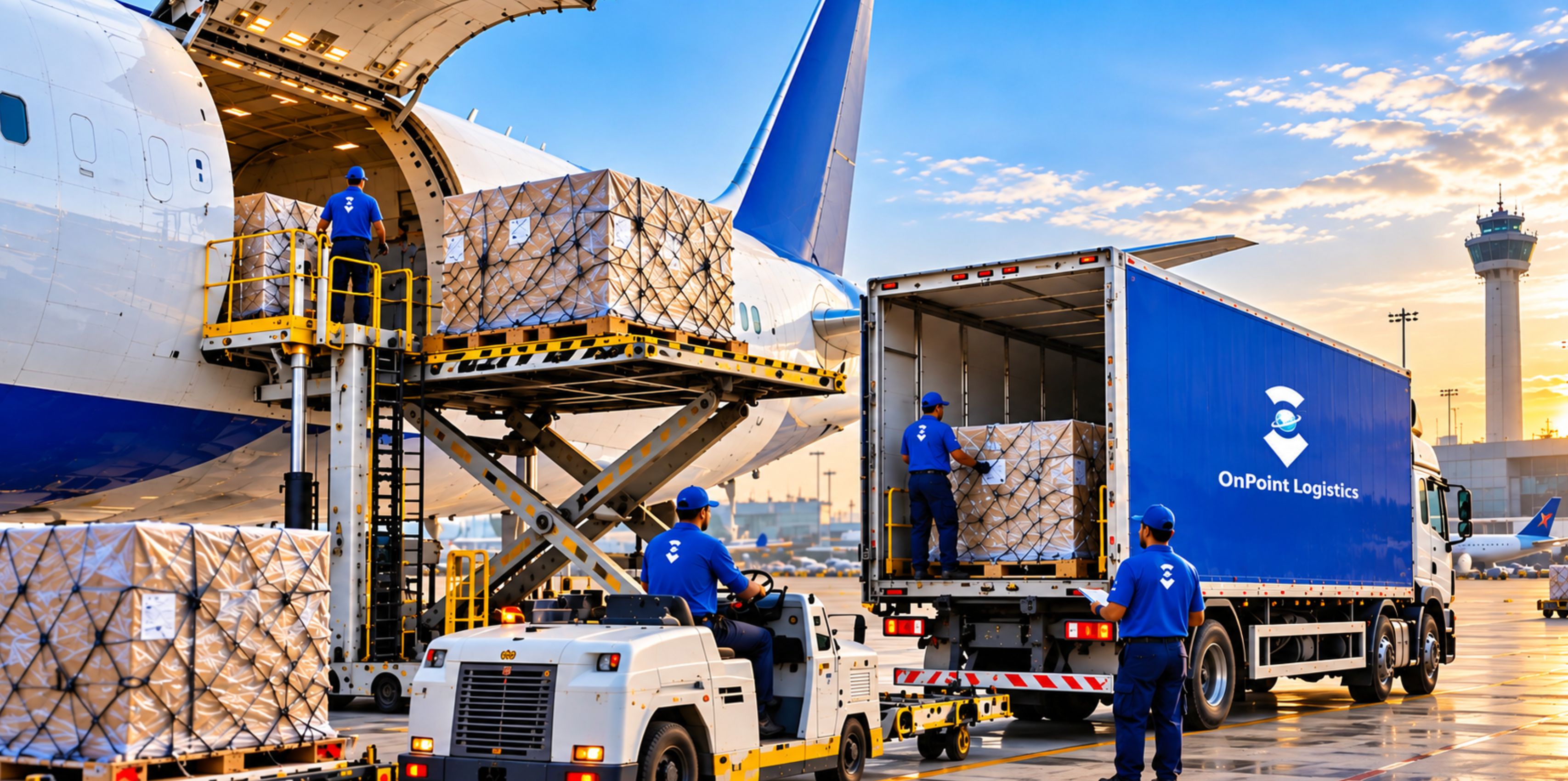
Common Air Freight Mistakes Businesses Should Avoid
1. Choosing Air Freight for Every Urgent Shipment
Not every urgent shipment requires the same service level.
What to do instead: Classify shipments according to urgency and business impact before selecting the service.
2. Ignoring Volumetric Weight
A lightweight but bulky shipment can have a higher chargeable weight than expected.
What to do instead: Calculate chargeable weight before requesting or approving a freight quotation.
3. Submitting Incomplete Documentation
Documentation errors can cause avoidable customs delays.
What to do instead: Establish a documentation checklist for recurring international shipments.
4. Focusing Only on the Freight Rate
The cheapest quote may not provide the most reliable total solution.
What to do instead: Evaluate freight, handling, customs, delivery, transit reliability, and potential delay costs together.
5. Treating Airport Arrival as Final Delivery
A shipment can arrive at its destination airport and still require clearance and onward transportation.
What to do instead: Plan the complete route through final delivery.
Building a More Reliable Air Freight Strategy
Businesses that use air freight regularly can improve performance by treating it as part of their supply chain strategy rather than a series of emergency shipments.
Segment Shipments by Urgency
Create practical categories such as:
- Emergency shipments
- Time-sensitive shipments
- Planned shipments
- Non-critical shipments
This helps logistics teams avoid paying premium rates when standard air freight is sufficient.
Establish Service-Level Expectations
Define expected milestones for pickup, transportation, customs clearance, and final delivery.
Clear expectations make it easier to identify performance issues.
Keep Documentation Ready
For recurring international movements, maintaining accurate product and shipment information can reduce preparation time and minimize avoidable errors.
Measure More Than Freight Cost
Useful performance indicators include:
- On-time delivery rate
- Transit-time variance
- Customs clearance time
- Shipment damage or claim rate
- Cost per shipment or kilogram
- Exception frequency
These metrics provide a more complete view of logistics performance than freight price alone.
Why End-to-End Air Freight Coordination Matters
Air freight is a chain of connected activities. A problem at one stage can affect every stage that follows.
That is why businesses often benefit from working with a logistics partner capable of coordinating the complete movement:
Pickup → Documentation → Air Transportation → Customs → Destination Handling → Final Delivery
For companies moving time-sensitive international cargo, the value of an air freight partner lies not simply in booking aircraft capacity, but in managing the shipment around the business's delivery requirements.
Onpoint logistics can support businesses looking for coordinated air freight shipping services, helping them assess shipment requirements, transportation options, documentation, and delivery needs.
The right service should be built around the cargo and the business timelinenot the other way around.
Conclusion
Air freight is not simply a premium alternative to slower transportation. For the right shipment, it can protect production schedules, support customer commitments, reduce inventory delays, and help businesses respond quickly to changing demand.
The key is knowing when speed creates enough business value to justify the cost.
By evaluating shipment urgency, chargeable weight, routing, customs requirements, delivery needs, and the cost of potential delays, businesses can make more informed air freight decisions.
For organizations that need dependable international transportation coordination, Onpointlogistics can help develop an air freight approach aligned with the shipment, destination, timeline, and operational requirements.
Frequently Asked Questions
- What are air freight shipping services?
Ans. Air freight shipping services move business products via airplanes and offer services that include product pickup, shipment scheduling, document handling, airport processing, customs procedures, and ultimate product distribution.
2. When is air freight better than ocean freight?
Ans. Air freight works best for businesses that need fast delivery because their items have high value compared to their weight, their production line would stop without inventory, and every moment of delay results in financial losses. Ocean freight serves as the better choice for shipping bulky, heavy goods that lack time sensitivity.
3. What is the difference between air cargo and air express?
Ans. Air cargo logistics handles all commercial freight operations, whereas air express logistics focuses on fast delivery operations for small yet urgent packages. The suitable choice depends on cargo features, shipment speed needs, transportation path, and delivery deadlines.
4. How is air freight cost calculated?
Ans. Air freight expenses depend on multiple factors, including actual weight measurements and volumetric weight calculations, point of origin to final destination, chosen flight path and shipping level selection, handling services and additional fees, customs processing needs and last-mile delivery costs. The applicable chargeable-weight calculation can vary by carrier and service.
5. How long does air freight shipping take?
Ans. Transit time depends on the origin and destination, flight availability, routing, connections, customs clearance, handling, and final delivery. A quoted transit time should therefore be evaluated as part of the complete shipment journey.
6. How should a business choose an air freight logistics company?
Ans. Businesses need to check more than just freight costs. Businesses need to assess their carrier and route availability, together with their customs processing skills, their ability to track shipments, their cargo handling systems, their methods for handling exceptions and their delivery network, and their track record for dependable service.